
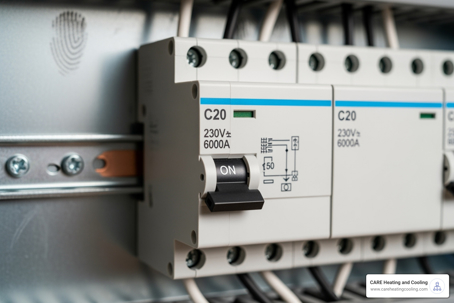
AC Breaker Tripping? Here’s the Shocking Truth and How to Fix It
Why Your AC Circuit Breaker Is Your Home’s Safety Hero
AC circuit breaker tripping is your electrical system’s way of protecting your home from dangerous overloads and potential fires. When your air conditioner’s breaker trips, it’s not broken—it’s doing exactly what it’s designed to do.
Quick Answer: Why AC Breakers Trip
- Overloaded circuit – AC drawing too much power
- Short circuit – Hot wire touching neutral wire
- Ground fault – Hot wire touching ground
- Dirty components – Restricted airflow causing overheating
- Faulty parts – Bad compressor, motor, or capacitor
Circuit breakers are safety devices that automatically shut off electrical current to prevent dangerous situations. Your AC unit is one of the biggest electrical loads in your home, and when components get dirty or fail, they can draw more electricity than the circuit can safely handle. The breaker trips to prevent overheating and potential fires.
The most common cause? A dirty air filter. When airflow is restricted, your AC works harder, draws more power, and trips the breaker. But sometimes the problem runs deeper, from failing compressors to loose wiring.
As one HVAC forum user noted: “The breaker kept tripping every afternoon… it became more frequent and eventually led to a complete shutdown. The issue turned out to be a loose wire inside the unit.”
Don’t just keep resetting the breaker. Repeatedly resetting a circuit breaker can cause an arc flash—a sudden release of heat and light that can burn skin, melt metal, and cause a powerful blast of pressure.
 482-4360738dafc3daea105dcd7f.jpg "Infographic showing circuit breaker function: electrical current flows through breaker to AC unit, when overload occurs breaker automatically trips to OFF position, preventing dangerous overheating and fire risk - AC circuit breaker tripping infographic")
Why Your AC Breaker Keeps Tripping: Common Culprits
When your AC circuit breaker tripping becomes a regular occurrence, your home is trying to tell you something important. It’s an electrical red flag that needs your attention.

Your breaker trips to protect your home from electrical overload, but the why behind that overload can vary.
Overloaded circuits happen when your AC tries to pull more electricity than the wiring can safely handle. The system is working so hard that it’s demanding more power than the circuit was designed for.
Short circuits are more dangerous. This occurs when a hot wire touches a neutral wire, creating an electrical “shortcut.” The result is a massive surge of current that trips your breaker almost instantly.
Ground faults are similar, but the hot wire touches a ground wire or the unit’s metal casing. The breaker trips to prevent a dangerous electrical shock.
Restricted airflow from dirty filters or blocked vents makes your AC work harder and draw more power. Overheating components are often the result, demanding even more electricity and pushing your system over the edge.
Common Causes of AC Circuit Breaker Tripping
Let’s talk about the usual suspects we see when diagnosing AC circuit breaker tripping.
A dirty air filter is the most common culprit. A clogged filter forces the blower fan to work overtime to pull in air, drawing excessive power. It’s often the simplest fix.
Dirty condenser coils on your outdoor unit can’t release heat efficiently when covered in debris. This makes the compressor work harder, get hotter, and draw more electricity.
Blocked vents inside your home have the same effect as a dirty filter, forcing the system to struggle and consume more power.
Low refrigerant from a leak makes your compressor work continuously to cool your home, drawing excessive power without success. This is a more serious issue.
For more details about these and other AC problems, check out our guide on common AC repair issues and solutions.
Electrical and Mechanical Failures
Sometimes the problem goes deeper than basic maintenance and requires professional attention.
A faulty compressor, the heart of your AC, is a common culprit. As it fails, it draws enormous amounts of power, causing consistent breaker trips.
Damaged fan motors, either in your indoor or outdoor unit, will work harder to spin if bearings are worn, drawing extra electricity and tripping the breaker.
Loose or damaged wiring creates heat from resistance or can cause direct shorts, both of which trip the breaker and pose a fire risk.
A bad capacitor prevents motors from starting and running efficiently, causing them to draw excess current. Replacing it can often solve persistent breaker trips.
Even the circuit breaker itself can weaken and fail over time, tripping even when the AC runs normally. It may need replacement if other causes are ruled out.
These more complex problems often show other warning signs. Learn more in our guide on signs you need HVAC repair.
 482-43605049f.jpg "outdoor AC condenser unit with its panel open showing wiring - AC circuit breaker tripping")
What to Do When Your AC Breaker Trips: A Step-by-Step Guide
When your AC breaker trips, don’t panic. A tripped breaker is a safety mechanism, not just an annoyance. Follow these safe, simple steps to assess the situation.
What to Do First for an AC Circuit Breaker Tripping
If your AC has suddenly gone quiet, follow these steps:
- Turn off the AC at the thermostat. Set it to “OFF” to prevent the unit from trying to restart unexpectedly.
- Locate your electrical panel. This is usually a gray metal box in a basement, garage, or utility closet.
- Identify the tripped breaker. Look for a switch in the “OFF” or middle position. Your AC is typically on a double-pole breaker labeled “AC” or “Furnace.”
- Push the breaker firmly to the full “OFF” position. This resets its internal mechanism.
- Flip the breaker back to the “ON” position. You should feel a distinct click.
- Wait 30 minutes. This crucial step allows the compressor to cool down and reset internally, preventing further damage.
- Turn the AC back on at the thermostat. Set it to “COOL” and your desired temperature.
If the breaker trips again immediately, do not keep resetting it. This indicates a more serious problem that needs professional attention. For more guidance, see our guide on What to Do When Your AC Stops Working.
Diagnosing the Trip: Immediate vs. Delayed
The timing of the trip provides a significant clue about the problem:
- Breaker Trips Immediately: If the breaker trips the moment you turn the AC on, it usually points to a severe electrical fault like a short circuit or a ground fault. This is a safety hazard that requires immediate professional diagnosis.
- Breaker Trips After Running for a While: If the AC runs for several minutes or hours before tripping, it typically indicates an overload caused by a component working too hard. Common causes include an overheating compressor, dirty coils, restricted airflow, or low refrigerant.
 482-4360-a37120131ec4?crop=entropy&cs=tinysrgb&fit=max&fm=jpg&ixid=M3w2MTMxNjF8MHwxfHNlYXJjaHwxfHxtdWx0aW1ldGVyJTIwdGVzdGluZyUyMGFuJTIwZWxlY3RyaWNhbCUyMGNvbXBvbmVudHxlbnwwfDB8fHwxNzU2NDY4MjgwfDA&ixlib=rb-4.1.0&q=80&w=1080 "multimeter testing an electrical component - AC circuit breaker tripping")
Understanding this timing distinction helps professionals narrow down the potential causes quickly and efficiently.
AC Circuit Breaker Tripping: Home Fixes or Call a Pro?
When your AC circuit breaker tripping leaves you sweating, it’s tempting to fix it yourself. While some issues are perfect for a DIY approach, others involve electrical components and refrigerant systems that can be dangerous. Knowing the difference is key to your safety.
Simple DIY Checks You Can Perform
Before calling for help, there are a few safe, straightforward checks you can do. These address the most common culprits behind AC circuit breaker tripping.
Check your air filter. This is your first line of defense. A clogged filter makes your AC work much harder. If it’s dirty, replace it with a fresh one and make a note to check it monthly.
Inspect your outdoor unit. Clear away any leaves, grass clippings, or overgrown bushes. Your AC needs at least two feet of clearance on all sides to breathe properly.
Check your indoor vents. Walk through your home and make sure all supply and return vents are fully open and not blocked by furniture or curtains.
These simple steps often solve the mystery. For more insights, our guide on common causes of an AC tripping the breaker covers additional scenarios.
When to Call a Professional for AC Breaker Issues
It’s time to step back and let professionals take over when the problem involves complex or dangerous components.
If your breaker trips immediately after you reset it, stop. This usually indicates a serious electrical fault, like a short circuit, that needs immediate professional attention.
When your DIY checks don’t solve the problem, the issue is likely deeper within the system and requires expert diagnosis.
Call a professional for any of the following suspected issues:
- Compressor issues: Diagnosing the heart of your AC requires specialized tools.
- Refrigerant leaks: Handling refrigerant requires certification. A technician must find and fix the leak, then properly recharge the system.
- Failing fan motors: A technician can test motors and replace them safely.
- Internal wiring problems: Damaged or loose wires are a fire hazard and should only be handled by a trained professional.
- Electrical panel issues: If the breaker itself is faulty, it may require a licensed electrician to inspect and replace it.
The bottom line? If your AC keeps shutting down despite your best DIY efforts, professional diagnosis is the smart, safe move. When you need reliable help, our AC Repair Service Near Me team is ready to restore your comfort.
The Dangers of Ignoring a Tripping Breaker and How to Prevent It
Ignoring a repeatedly tripping breaker is like ignoring a smoke alarm—it’s a warning sign that needs your attention. When you keep resetting the breaker without fixing the underlying problem, you’re playing with fire. Your AC circuit breaker tripping isn’t just an inconvenience; it’s your home’s electrical system crying out for help.

Risks of Repeatedly Resetting the Breaker
Continuously resetting a breaker puts immense stress on your electrical system and AC unit, leading to dangerous consequences.
Arc flash risk is the most immediate danger. Resetting a breaker that trips immediately can create an arc flash—a violent electrical explosion inside your panel that can cause severe burns and create a powerful pressure wave.
The fire hazard is equally serious. The underlying fault generates excessive heat. When you keep resetting the breaker, that heat can build up, melt wire insulation, and start a fire inside your walls.
Your AC equipment also suffers. Component stress from repeated power surges can permanently damage expensive parts like the compressor. A struggling compressor that keeps tripping the breaker will eventually be destroyed.
Even the circuit breaker itself weakens over time. Each trip wears down its internal mechanism. A weakened breaker might eventually fail to protect your home when you need it most.
Understanding how circuit breakers work helps you appreciate why ignoring their warnings is so risky.
How Regular Maintenance Prevents Breaker Trips
The good news is that most AC circuit breaker tripping issues are preventable with regular maintenance.
Clean components are the foundation of trouble-free operation. During service, we clean condenser coils and check filters to ensure the system works efficiently and doesn’t overload circuits.
An efficiently operating system draws only the power it’s designed to use, keeping it within safe electrical limits.
During maintenance, our technicians check for tight electrical connections to prevent the resistance and overheating that can lead to a trip.
Most importantly, regular maintenance provides early problem detection. We can spot a failing capacitor or a refrigerant leak before it becomes an expensive, breaker-tripping disaster.
Think of maintenance as an insurance policy for your comfort and safety. Learn more with our guide on AC Service for Longevity and Efficiency.
Frequently Asked Questions about AC Breaker Trips
We’ve helped Ohio homeowners with their cooling systems for years and have heard just about every question on AC circuit breaker tripping. Here are the most common ones.
Why does my AC breaker only trip on very hot days?
On very hot days, your AC runs longer and works harder. This increased workload strains the entire system. If there’s an underlying issue like dirty coils, low refrigerant, or an aging compressor, the extra electrical demand on a hot day can be the final straw that trips your breaker. This is especially common in systems over 10 years old.
Can a power surge from a storm trip my AC breaker?
Absolutely. A power surge from a storm can trip your breaker. This is a protective trip; the breaker is doing its job by protecting your expensive AC equipment from damage. If it’s a one-time event, you can usually reset it after waiting 30 minutes for the system to cool down. However, if the breaker keeps tripping after the storm has passed, it indicates an underlying AC problem, not just a surge.
Is a buzzing sound from my circuit breaker normal when the AC runs?
No, and you should not ignore it. A distinct buzzing noise from your breaker is a serious warning sign. It usually indicates a loose connection or a bad breaker, both of which are significant fire hazards. It can also signal a constantly overloaded circuit. Whatever the cause, a buzzing breaker requires immediate attention from a professional.
If you’re dealing with unexpected system failures, our guide on Emergency AC Solutions: System Fails can help you know what to do next.
Don’t Risk It: Get Professional Help for Your Tripping Breaker
When your AC circuit breaker tripping becomes a regular event, it’s a clear sign your system needs attention. That breaker is the hero of this story, protecting your home from overheating components, short circuits, and potential fires. Whether the problem is restricted airflow or a failing compressor, the breaker is doing its job to keep you safe.
However, repeatedly resetting a tripping breaker without addressing the root cause is a costly mistake. You risk permanent equipment damage, creating a fire hazard, and even causing a dangerous arc flash.
Safety should always come first. While changing an air filter is a safe DIY task, diagnosing electrical faults, testing compressors, or handling refrigerant requires professional expertise.
That’s where our team at CARE Heating and Cooling makes all the difference. We’ve built our reputation on ethical service and honest diagnostics. Our technicians are paid to fix your unit, not to sell you a new one, which means you can trust our recommendations. We’ve even been awarded the BBB Torch Award for Ethics for our commitment to doing right by our customers.
Our highly trained technicians use professional-grade equipment to quickly identify whether your AC circuit breaker tripping is caused by a simple issue or something more complex. We pinpoint the exact problem, saving you time, money, and frustration.
Don’t let a tripping breaker turn into a major headache or safety hazard. If you’ve tried the basic troubleshooting steps and the problem persists, it’s time to call in the professionals who can restore your comfort safely.