
Why Your Air Conditioner Stopped Working When You Need It Most
An AC not cooling is a frustrating problem, especially during hot summer days. Whether it’s blowing warm air, running constantly, or not turning on, the issue usually stems from a few common causes, ranging from simple fixes to complex repairs requiring professional help.
Quick Answer: Most Common Reasons for AC Not Cooling
- Thermostat issues – Wrong settings, dead batteries, or calibration problems
- Dirty air filter – Restricts airflow and causes system overheating
- Low refrigerant – Often due to leaks in the system
- Frozen evaporator coils – Usually caused by poor airflow or refrigerant issues
- Blocked outdoor unit – Debris preventing heat release
- Electrical problems – Failed capacitors, contactors, or wiring issues
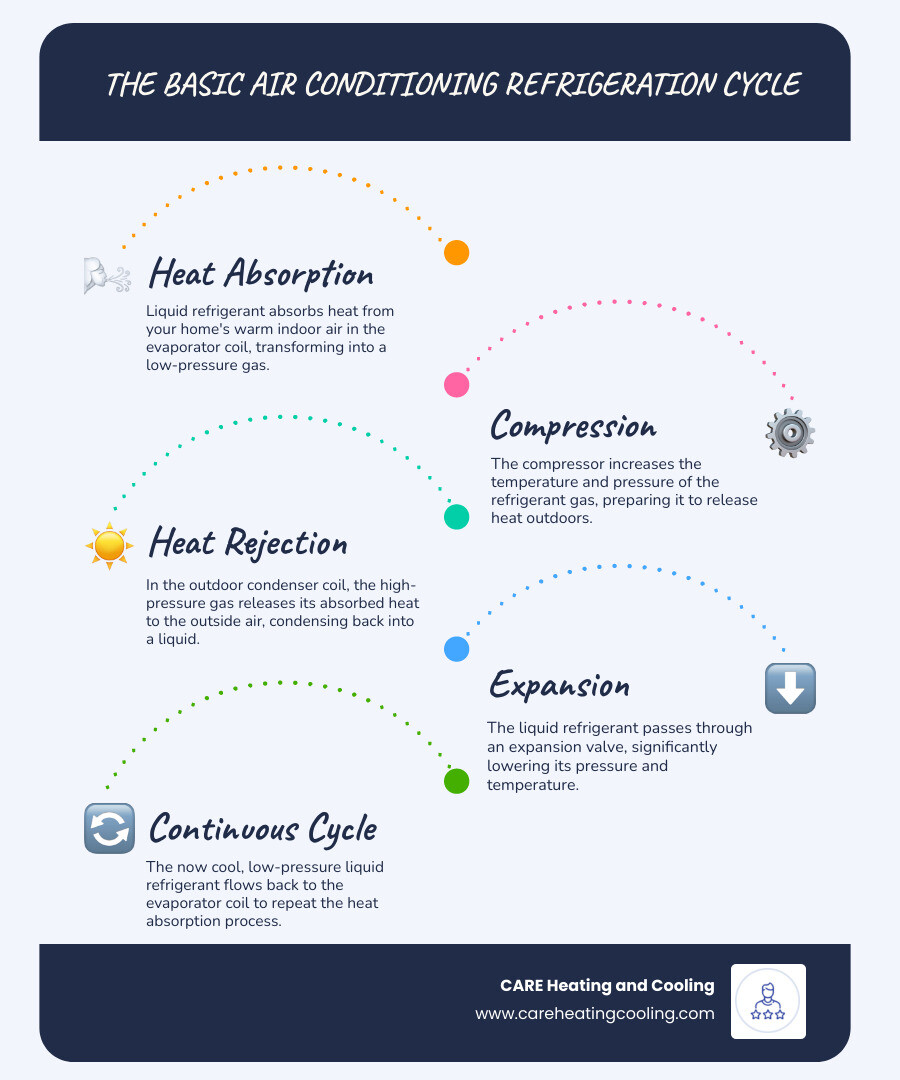
Your AC moves heat from inside your home to the outside via the refrigeration cycle. If any part of this system fails, it can’t effectively remove heat, leaving you hot and uncomfortable.
Three-quarters of all homes in the US have air conditioners, making cooling problems a widespread concern. The good news is that many AC issues can be diagnosed and even fixed by homeowners. Understanding your system helps you make informed decisions about repairs and know when it’s safe to troubleshoot yourself versus when you need expert help.
First Steps: Easy DIY Troubleshooting for an AC Not Cooling
When your AC stops working, don’t panic. Before calling for service, perform a few simple checks at home. These basic troubleshooting steps can often resolve minor issues, saving you time and money. Sometimes, getting your cool back is as simple as a few clicks or a quick clean.
Check Your Thermostat Settings
This might sound obvious, but incorrect thermostat settings are a common culprit when your AC not cooling. A simple adjustment often fixes the problem.
First, ensure your thermostat is set to “Cool” mode, not “Heat” or “Fan Only.” The “Fan Only” setting circulates uncooled air, which can be misleading.
Next, check the fan setting. It should ideally be on “Auto,” so the fan only runs during a cooling cycle. If it’s set to “On,” the fan runs continuously, blowing uncooled air when the compressor is off.
Finally, make sure the temperature setting is lower than the current room temperature, or the AC won’t turn on.
If your thermostat screen is blank, try changing the batteries. For smart thermostats, a reboot can sometimes resolve glitches.
Inspect and Clean the Air Filter
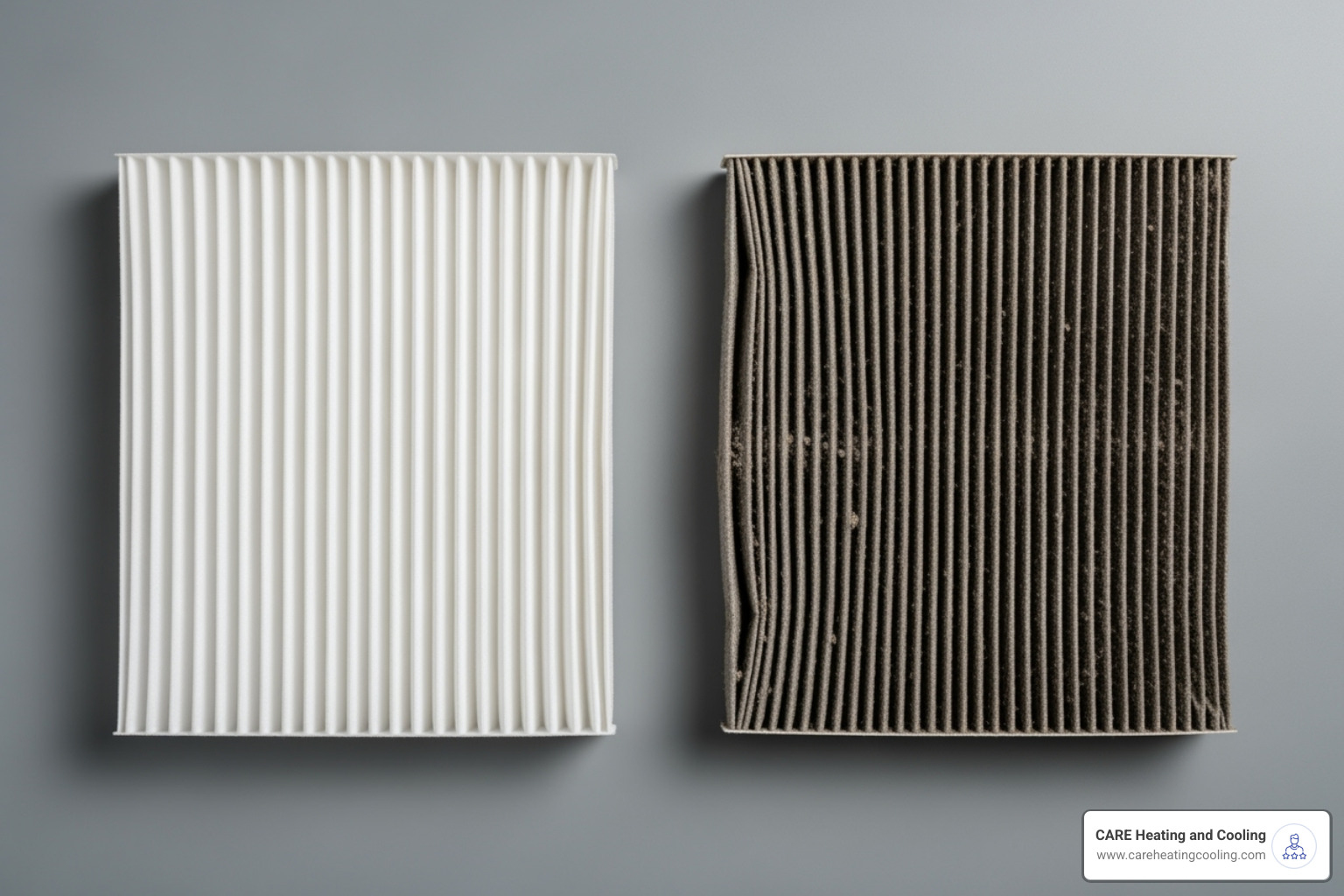
A dirty air filter is a frequent cause of an AC not cooling because it restricts airflow. Your AC needs a steady flow of air across its indoor evaporator coil to absorb heat. When the filter is clogged:
- Reduced Efficiency: The system works harder, reducing cooling and raising energy bills.
- Overheating: The unit can overheat and shut down.
- Frozen Coils: Insufficient airflow can cause the evaporator coil to freeze, which completely stops it from cooling your home.
Replace or clean air filters every 1-3 months (or every 30-45 days if you have pets or allergies). The filter is usually in the indoor air handler or a return air vent. If it looks dirty, it’s time for a change.
Check the Circuit Breaker and Power
If your AC is completely unresponsive, check your home’s electrical system after checking the thermostat.
Your AC system has dedicated circuit breakers in your electrical panel. There is usually one for the indoor unit and another for the outdoor unit. If a breaker has “tripped,” it has shut off power to prevent an overload.
Go to your electrical panel and look for any breakers in the “off” or middle position. Flip the breaker firmly to “off” and then back to “on.”
Important Safety Note: If a breaker trips again immediately, do not reset it repeatedly. This indicates a more serious electrical issue that requires professional attention. Repeatedly resetting it can cause system damage or a fire hazard.
Also, check the power disconnect switch near your outdoor AC unit. This small box on the wall next to the condenser should be in the “on” position.
Common Reasons Your Air Conditioner Stopped Working
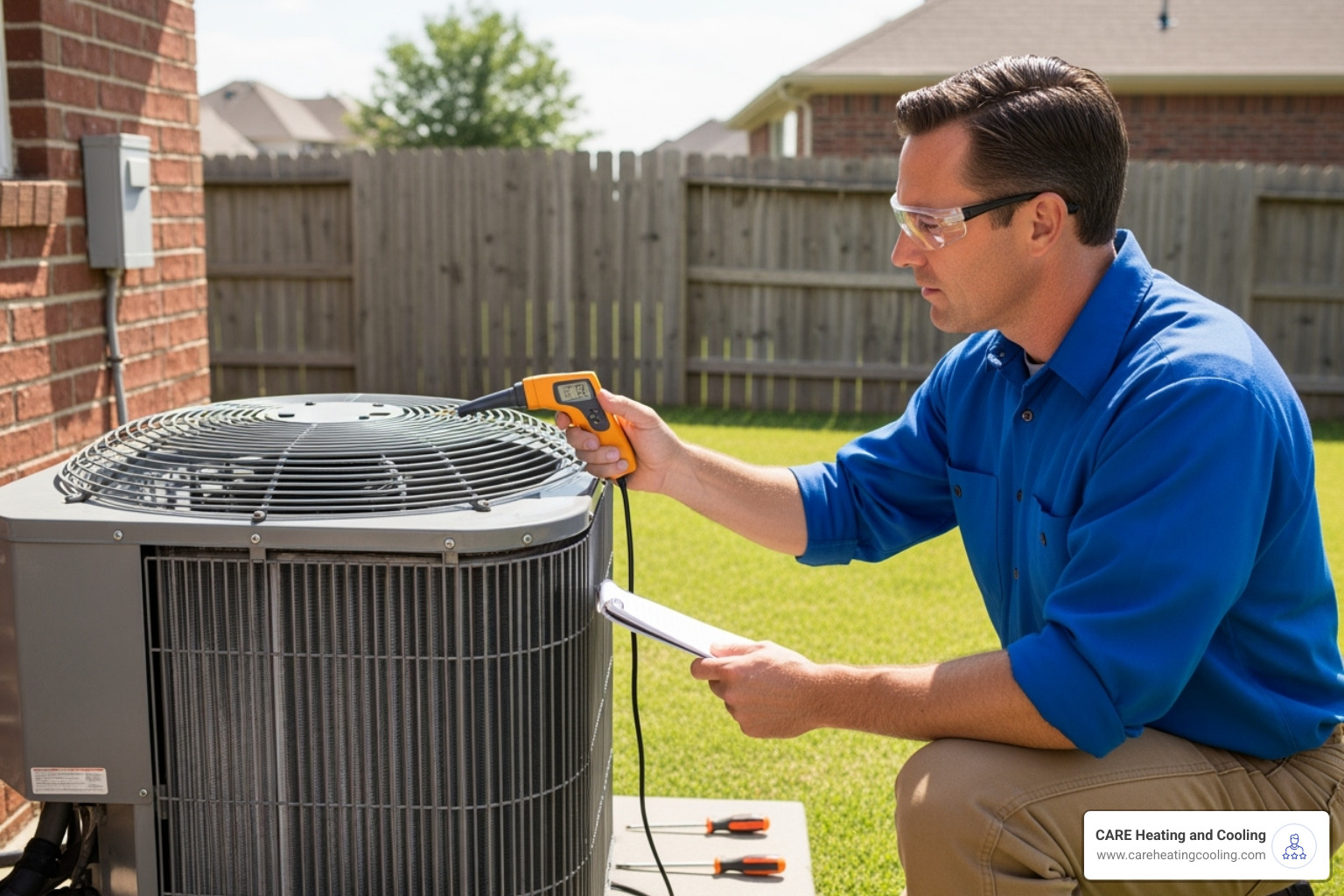
If DIY troubleshooting fails and your AC not cooling problem persists, the issue likely involves your system’s inner workings, which require professional diagnosis. Understanding these potential problems helps you make informed decisions. Let’s explore the most common culprits.
Low Refrigerant: The #1 Culprit for an AC Not Cooling
Refrigerant is the fluid that makes cooling happen by absorbing heat from your home and releasing it outside. When levels are low, your AC can’t cool effectively. Your AC is a closed-loop system, so refrigerant isn’t “used up.” Low levels almost always mean there’s a leak. Simply adding more refrigerant without fixing the leak is a temporary, costly fix.
Signs of a leak include hissing or bubbling sounds, increased humidity, and oily residue near your outdoor unit. Ice on your indoor unit can also be a symptom. Refrigerant leaks can be hazardous, so signs of refrigerant leaks in your AC should never be ignored. In severe cases, you could face refrigerant poisoning. This is a job for professionals who can safely detect and repair leaks.
Frozen Evaporator Coils
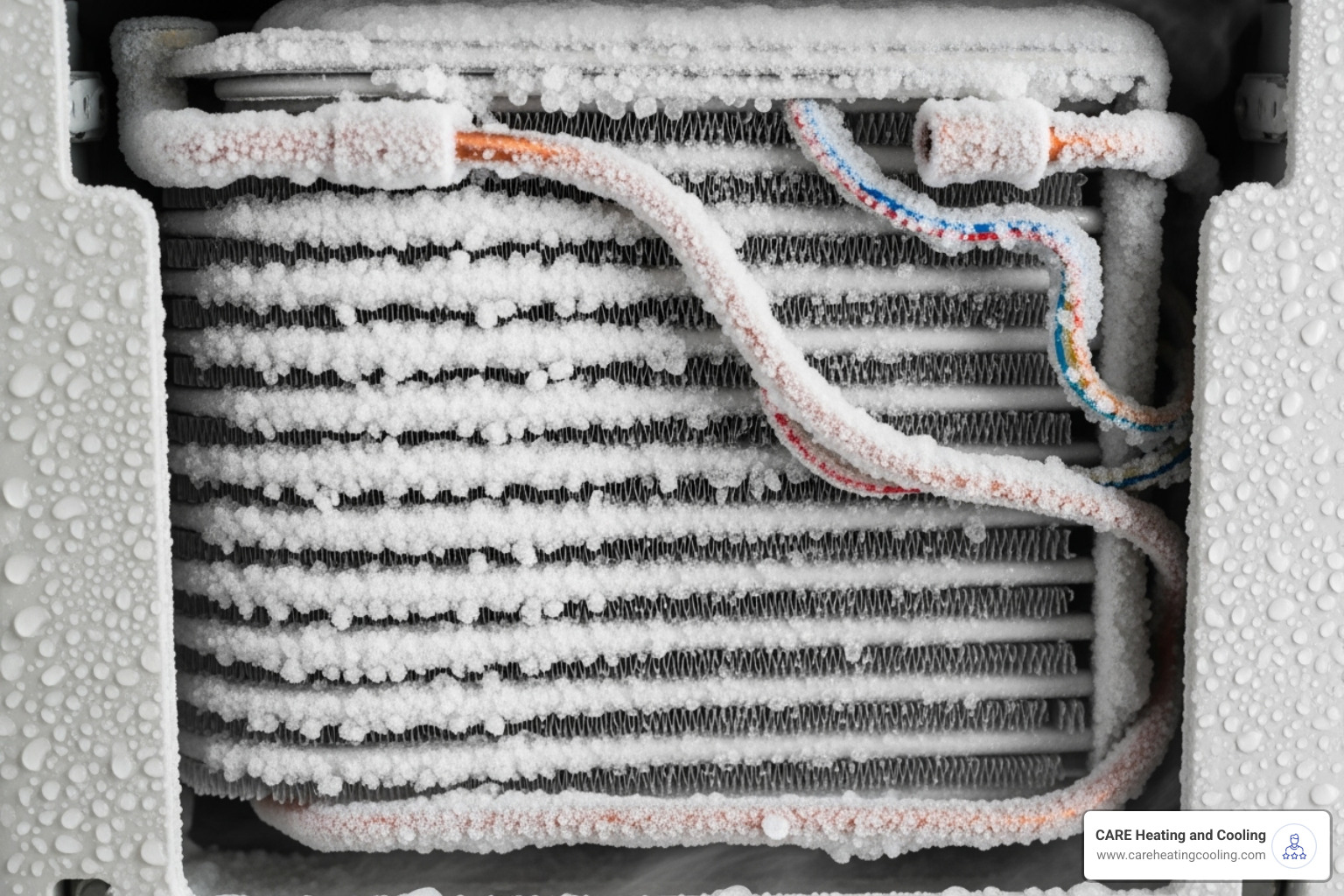
When the indoor evaporator coil gets covered in ice, it can’t absorb heat, stopping the cooling process. The ice acts like an insulating blanket. The main causes are restricted airflow (from a clogged filter or blocked vents) and low refrigerant levels.
Signs of a Frozen Evaporator Coil:
- AC runs constantly but produces little to no cool air
- Visible ice on the indoor unit or refrigerant lines
- Reduced airflow from vents
- Water leaking from the indoor unit as ice melts
- Higher indoor humidity
If you suspect frozen coils, turn off your AC immediately and switch the thermostat to “Fan Only” to help it thaw. Do not chip away the ice, as this can damage the coil. Place towels around the indoor unit to catch melting water. If the coil freezes again after thawing, it’s time to call a professional. Proper maintenance can help prevent AC freezing during hot weather.
Dirty or Blocked Outdoor Condenser Unit
Your outdoor unit’s job is to release the heat pulled from your house. If its condenser coils are blocked by leaves, grass clippings, or debris, they can’t release heat efficiently, and your AC not cooling becomes inevitable. Keep at least two feet of clear space around the unit.
Over time, the coils also accumulate dirt and grime, which acts as an insulating blanket, trapping heat. This forces your AC to work harder and use more energy. You can clear visible debris, but cleaning the coils requires special tools and should be done by a professional to avoid damage.
What Electrical Issues Cause an AC Not Cooling?
Beyond tripped breakers, your AC has complex electrical components that can fail. These issues require professional diagnosis for safety.
The capacitor is a small component that provides the power surge to start your compressor and fan motors. A failed capacitor might cause a humming or AC makes clicking noises from your outdoor unit without the system starting.
Your contactor is an electrical switch that allows power to flow to major components. If it fails, your outdoor unit won’t receive power.
Worn or damaged wiring from age, weather, or pests can cause intermittent operation. A burning smell is a serious safety concern that requires you to turn off the unit and call for service immediately.
Compressor failure can be an electrical issue. If the compressor isn’t getting proper power from faulty components, it won’t run. This is often the cause when you hear your AC making buzzing noises. These electrical problems are not DIY fixes; always call a professional.
Prevention is Key: How Regular Maintenance Stops Cooling Problems
Being caught with an AC not cooling on a hot day shows why prevention is better than a panicked repair call. Like changing your car’s oil, regular AC maintenance is crucial to avoid breakdowns.
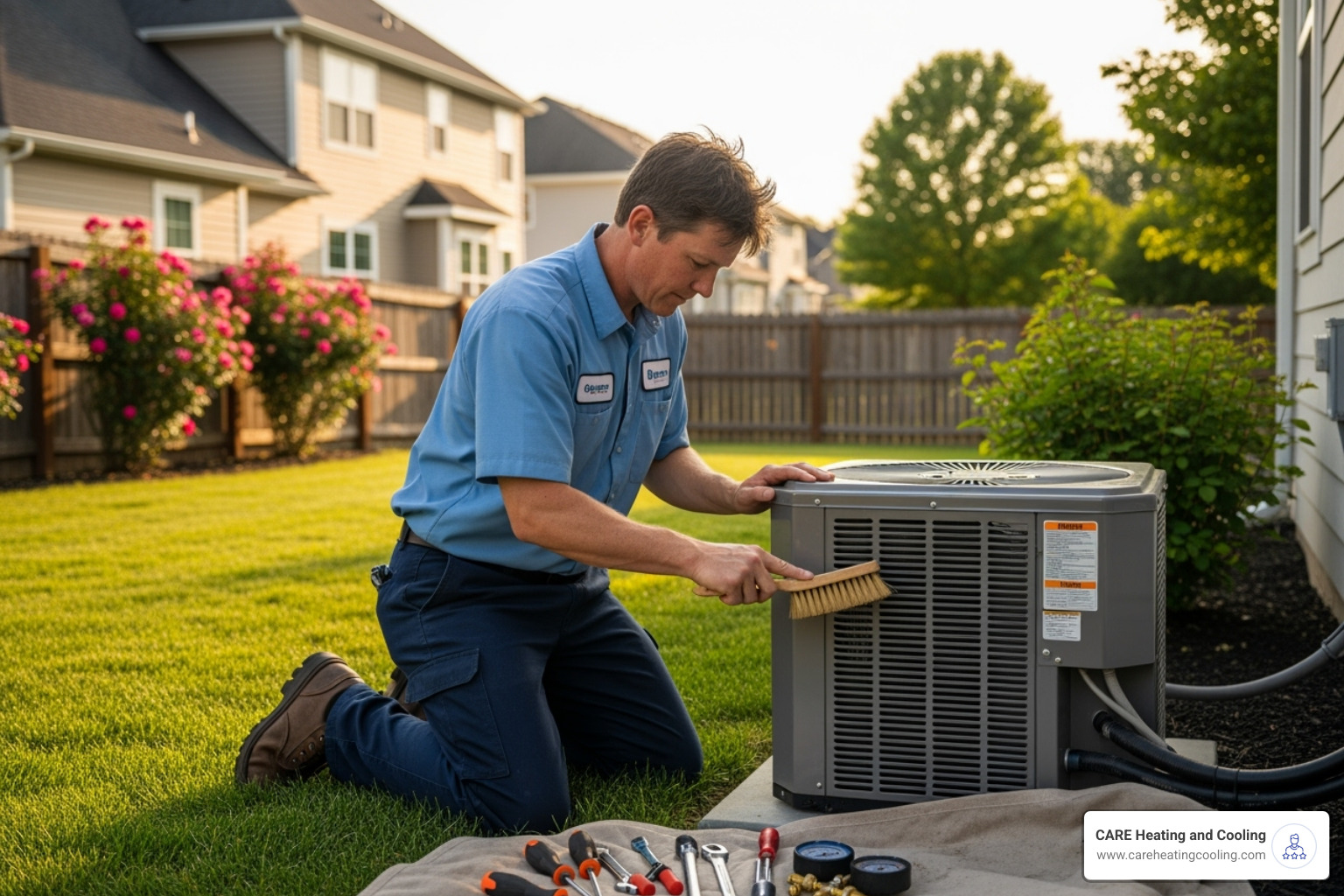
Routine AC service for longevity and efficiency is a health check-up for your system that prevents emergencies. The benefits are clear: a well-maintained AC lasts 15-20 years, compared to 10-15 for a neglected unit, saving you thousands in premature replacement costs. It also runs more efficiently, lowering your monthly bills.
Most importantly, routine care helps us catch small issues before they become big headaches, like replacing a worn capacitor in spring for a fraction of the cost of an emergency summer repair. Additionally, most manufacturers require annual professional maintenance to keep your warranty valid.
What’s Included in a Professional Tune-Up
A thorough AC tune-up is a comprehensive inspection of every component. Key tasks include:
- Coil cleaning: We clean both indoor and outdoor coils to ensure efficient heat transfer.
- Refrigerant check: We check refrigerant levels and inspect for leaks.
- Electrical inspection: We check capacitors, contactors, and wiring for wear to prevent an AC not cooling failure.
- Drain line maintenance: We flush the condensate drain line to prevent water damage.
- Lubrication: We lubricate all moving parts to reduce friction and wear.
- Filter and thermostat check: We replace or clean the air filter and calibrate the thermostat.
The Importance of Spring Maintenance
Spring is the ideal time for AC maintenance, preparing your system for the summer heat. Spring AC maintenance lets us wake up your system after its winter hibernation and test all components.
Spring tune-ups allow us to address potential issues conveniently, preventing an emergency call when it’s 95 degrees outside. It also ensures your system operates at peak efficiency from the start of the cooling season, keeping you comfortable while using less energy. The importance of AC tune-ups is clear when you sail through a heat wave while others are waiting for repairs.
Frequently Asked Questions About AC Cooling Issues
We often hear from frustrated homeowners with cooling problems. Here are the most common questions we get, with answers to help you before your AC not cooling becomes a crisis.
Why is my AC blowing warm air instead of cold?
Warm air from your AC vents is a common complaint with several possible causes. The most frequent culprits include:
- Outdoor unit not running: This could be due to a tripped breaker or a failed compressor.
- Incorrect thermostat settings: It could be on “Heat” or “Fan Only.” Always double-check this first.
- Refrigerant leaks: Low refrigerant prevents the system from absorbing heat.
- Frozen evaporator coil: An iced-over indoor coil blocks cooling.
- Dirty condenser coils: If the outdoor coils can’t release heat, the system circulates warm air.
If you’ve checked your thermostat and filter, these other issues require professional diagnosis.
What are the signs my AC unit is too small for my house?
An undersized AC unit is a common problem, especially in renovated or expanded homes. It simply isn’t equipped to handle the cooling load. Signs include:
- Constant running: The AC runs all day but never reaches the set temperature.
- High energy bills: The unit works overtime, driving up costs.
- Uneven cooling: Some rooms are cool while others remain hot and sticky.
- High humidity: The unit can’t effectively remove moisture from the air.
If these symptoms sound familiar, we can perform a load calculation to determine the correct system size for your home.
How often should I really get my AC serviced?
Our honest answer is once a year, every year. There’s solid reasoning behind this recommendation. Most manufacturers require annual professional maintenance to keep your warranty valid.
Your AC works hard all summer. Just like a car needs oil changes, your AC needs regular attention. Spring maintenance is ideal to prepare it for the workload ahead and catch small problems before they become major breakdowns.
With consistent annual maintenance, an AC unit can last 15 to 20 years or more, well beyond the average 10-15 year lifespan. The service is a small investment that pays for itself in energy savings, longevity, and peace of mind.
Get Your Cool Back with Professional AC Repair
We know how miserable it is when your AC not cooling turns your home into a sauna. It’s a sinking feeling when simple fixes don’t work and you’re facing a hot, sleepless night.
While you can check thermostats, filters, and breakers, many problems go deeper. Issues like refrigerant leaks, frozen coils, failed electrical components, or compressor problems require professional tools and training. Attempting these repairs yourself is not just ineffective—it can be dangerous. Refrigerant exposure, electrical shocks, and improper repairs can lead to bigger problems. Your HVAC system is a major investment that deserves professional care.
That’s where CARE Heating and Cooling steps in. We’ve built our reputation on ethical, honest service and are proud winners of the BBB Torch Award for Ethics. Our commitment is to do right by our customers.
What makes us different? Our technicians are paid to fix your existing unit, not to sell you a new one. We focus on getting your current system running reliably, without high-pressure sales tactics or upselling. We provide honest diagnoses and effective solutions for your situation and budget.
Whether you need emergency air conditioner repair or comprehensive Columbus, OH air conditioner repair, our experienced technicians are here to help in Westerville, OH, and the surrounding areas.
Don’t spend another day sweating it out. Contact CARE Heating and Cooling today, and let us bring comfort back to your home with professional, trustworthy AC repair service.