
Why Your Heat Pump Deserves Professional Care
Best heat pump repair in columbus, oh starts with recognizing that your heat pump works year-round to keep your home comfortable. When it breaks down, you need a qualified technician who can diagnose the problem correctly and fix it right the first time. Unfortunately, many homeowners face pressure tactics, unnecessary replacements, or rushed repairs that don’t last.
What makes quality heat pump repair in Columbus:
- Expert technicians with specialized training
- Thorough diagnostics using professional equipment
- Clear explanations of the problem and repair options
- Honest advice and transparent service
- Warranty protection on parts and labor
- Emergency service when you need it most
Heat pumps are complex systems that both heat and cool your home by moving heat rather than generating it. This dual functionality means they work harder than traditional HVAC systems, especially during Ohio’s temperature extremes. When something goes wrong, the right repair service makes all the difference between a quick fix and recurring problems.
The research shows that up to 50% of heat pump failures stem from improper maintenance and delayed repairs. That’s why finding a trustworthy professional matters so much. You need someone who will repair what’s broken, not sell you what you don’t need.
Learn more about comprehensive heat pump services or schedule your repair today.
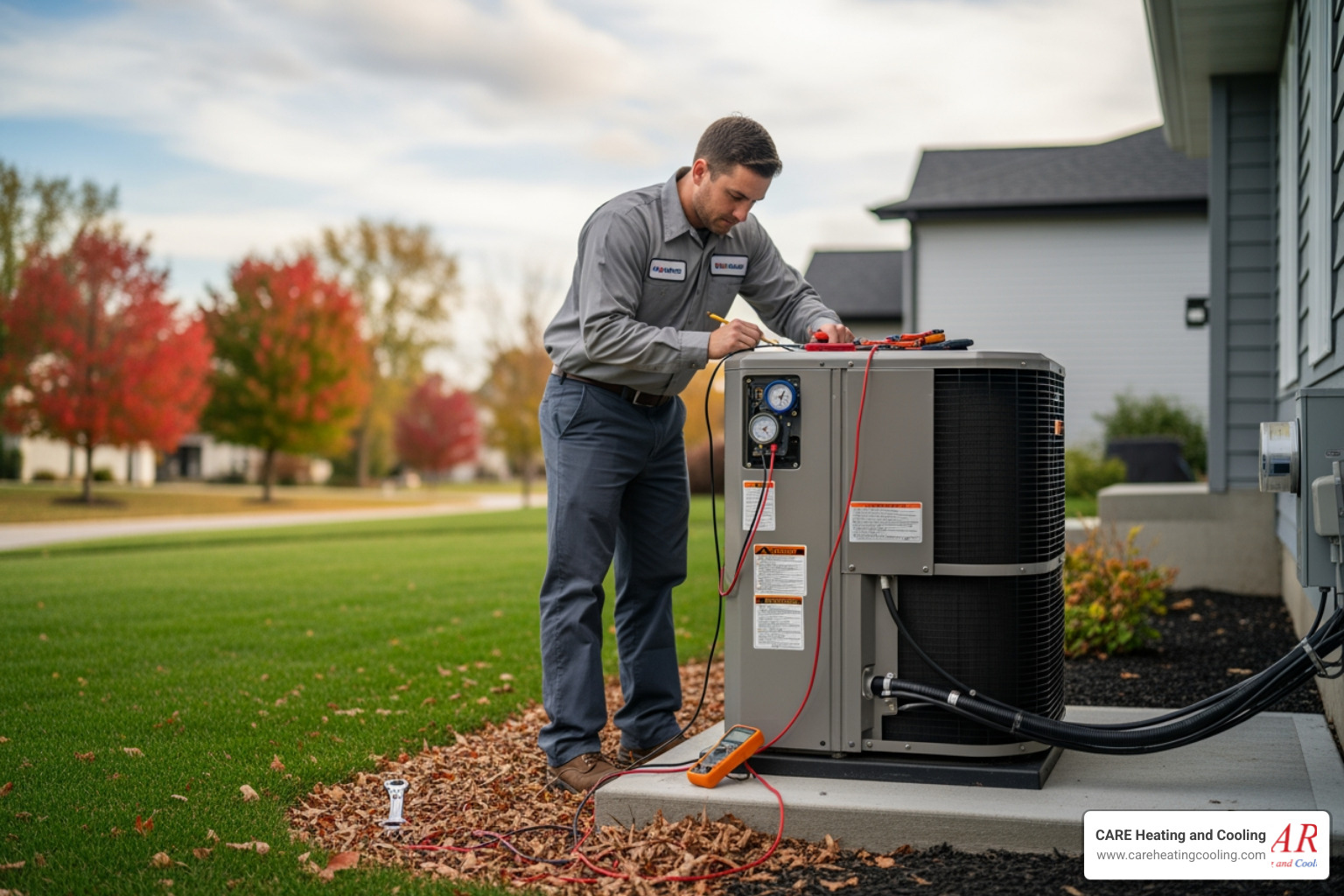
Recognizing the Red Flags: Common Signs Your Heat Pump Needs Repair
Imagine a chilly Columbus morning, and your heat pump decides to take a vacation. Or perhaps it’s a sweltering summer afternoon, and your home feels more like a sauna. Our heat pumps are designed to keep us comfortable year-round, but like any hardworking appliance, they sometimes need a little TLC. Recognizing the early warning signs can save you from a complete system breakdown and a lot of discomfort.
One of the most noticeable signs that your heat pump is struggling is unusual noises. While some operational hums are normal, grinding, squealing, hissing, or gurgling sounds are definitely red flags. These noises often indicate mechanical problems that need professional attention, such as worn bearings, loose components, or issues with refrigerant. Ignoring them can lead to more extensive and expensive repairs down the line.
Another common complaint we hear from homeowners in Columbus, Delaware, Dublin, and other surrounding areas is inconsistent temperatures throughout their home. If some rooms are too hot while others are too cold, or if your home just never seems to reach the desired temperature despite the thermostat setting, your heat pump might be to blame. This could be due to issues like a faulty reversing valve, airflow blockages, or even a struggling compressor. If you’re experiencing uneven cooling, our guide on Solving Uneven Cooling With Heat Pumps might offer some initial insights.
Have you noticed a sudden spike in your energy bills without a change in usage? A poorly maintained or malfunctioning heat pump can significantly increase energy consumption. As your system works harder to compensate for inefficiencies, it consumes more power, leading to those unwelcome higher utility statements. In fact, a poorly maintained heat pump can increase energy bills by 15-25% due to inefficiency.
Frequent cycling, or “short cycling,” is another critical sign. This is when your heat pump turns on and off frequently for short periods, rather than completing a full heating or cooling cycle. While occasional short cycles might be normal, consistent short cycling indicates an underlying issue. It can be caused by anything from thermostat problems to refrigerant leaks or an incorrectly sized system. Not only does this reduce comfort, but it also puts excessive strain on your system, potentially shortening its lifespan.
Finally, if your system is blowing incorrect air temperature – for instance, cold air in heating mode or warm air in cooling mode – it’s a clear indication something is amiss. This could point to a reversing valve issue, a problem with refrigerant levels, or electrical faults. For more detailed information on identifying these issues, refer to our page on Signs You Need Heat Pump Repair.
Decoding Common Heat Pump Problems
Understanding the specific problems that can plague your heat pump helps us communicate better with our technicians and appreciate the complexity of the repairs. Here are some common heat pump issues we encounter in the Columbus area:
- Refrigerant Leaks: Refrigerant is the lifeblood of your heat pump, absorbing and releasing heat. If your system has a leak, it won’t be able to effectively transfer heat, leading to reduced performance and higher energy bills. Leaks can be tricky to detect and require specialized tools and trained professionals for repair.
- Electrical Faults: Heat pumps rely on a complex network of electrical components, from capacitors and contactors to wiring and control boards. A faulty wire, a blown fuse, or a malfunctioning control board can shut down your entire system or cause intermittent operation. These issues require careful diagnosis by a professional to ensure safety and proper repair.
- Compressor Issues: The compressor is often considered the heart of your heat pump. It circulates the refrigerant and pressurizes it. If the compressor fails, your heat pump essentially stops working. Compressor problems can be costly to fix, and sometimes, a full system replacement might be more economical depending on the unit’s age.
- Reversing Valve Problems: Unique to heat pumps, the reversing valve is responsible for switching your system between heating and cooling modes. If this valve gets stuck or malfunctions, your heat pump might get “stuck” in one mode or blow air of the incorrect temperature. Learn more about these specific issues on our Heat Pump Reversing Valve Problems page.
- Thermostat Malfunctions: Sometimes the problem isn’t with the heat pump itself, but with its brain – the thermostat. A miscalibrated, faulty, or incorrectly programmed thermostat can lead to erratic operation, temperature inconsistencies, or your system simply not turning on.
For a deeper dive into these and other common heat pump issues, including their solutions, we invite you to read our guide on Common Heat Pump Repair Issues.
What to Expect from the Best Heat Pump Repair in Columbus, OH
When your heat pump calls it quits, you want a repair service that is not only effective but also trustworthy. The best heat pump repair in Columbus, OH, is defined by several key attributes that ensure your system is fixed correctly, safely, and efficiently. We believe in providing service that gives you peace of mind, knowing your home comfort is in capable hands.
A professional repair begins with thorough diagnostics. Our expert technicians use advanced diagnostic tools to pinpoint the root cause of the problem. This isn’t just about identifying a symptom; it’s about understanding why that symptom is occurring. This precise approach ensures we address the actual issue, preventing recurring problems and unnecessary repairs.
Choosing professional heat pump repair also brings significant safety benefits. Heat pumps involve electrical components, refrigerants, and moving parts, all of which can be hazardous if handled improperly. Our trained technicians understand these risks and follow strict safety protocols, protecting both themselves and your home.
We come equipped with specialized tools designed specifically for heat pump systems. From refrigerant gauges to electrical meters and leak detectors, these tools enable accurate diagnostics and precise repairs that a general toolkit simply can’t achieve. This expertise is crucial for ensuring the longevity and efficiency of your system.
Furthermore, a reputable repair service offers warranty protection on both parts and labor. This means if the same issue recurs within a specified period, we’ve got you covered. It’s our commitment to quality workmanship and your assurance that the repair will last.
Finally, we understand that heat pump emergencies don’t stick to a 9-to-5 schedule. That’s why we offer emergency services for those unexpected breakdowns that occur outside regular business hours. Whether it’s a weekend or a holiday, we’re here to restore your comfort promptly. For more information on our comprehensive services, visit our Heat Pump Repair Services page.
Why a DIY Approach Can Be Risky
While we appreciate the spirit of a do-it-yourselfer, attempting complex heat pump repairs without the right expertise, tools, or certifications can lead to a host of problems. Remember the statistic we mentioned earlier? Up to 50% of heat pump failures are caused by improper maintenance and delayed repairs. A well-intentioned DIY repair could inadvertently contribute to this statistic.
Here’s why we strongly advise against a DIY approach for heat pump repairs:
- Voiding Warranties: Many heat pump manufacturers’ warranties explicitly state that repairs must be performed by trained professionals. A DIY attempt could void your warranty, leaving you without coverage for future repairs or replacements.
- Safety Hazards: As mentioned, heat pumps contain high voltage electrical components and refrigerants that require careful handling. Electrocution, refrigerant burns, or even explosions are serious risks for untrained individuals.
- Potential for More Damage: Without the proper diagnostic tools and technical knowledge, you might misdiagnose the problem or, worse, inadvertently damage other components while attempting a fix. What started as a minor issue could escalate into a major, more expensive repair.
- Lack of Proper Tools: Heat pump repairs often require specialized tools that are expensive and not typically found in a homeowner’s garage. Without these tools, repairs can be inefficient, incomplete, or even impossible.
- Inefficient Repairs: A DIY repair, even if it temporarily resolves the issue, might not address the underlying cause. This can lead to your system running inefficiently, consuming more energy, and ultimately breaking down again sooner rather than later.
What to Expect from the best heat pump repair in Columbus, OH
When you entrust your heat pump to professionals, you’re investing in a systematic and effective resolution to your comfort issues. Here’s what our process typically entails:
- Thorough Inspection: Our technicians begin with a comprehensive inspection of your entire heat pump system, both indoor and outdoor units. This includes checking electrical connections, refrigerant lines, coils, filters, and all mechanical components. We leave no stone unturned to ensure we understand the full picture of your system’s health.
- Clear Diagnosis: Following the inspection, we provide you with a clear, easy-to-understand diagnosis of the problem. We explain what’s wrong, why it happened, and what needs to be done to fix it. We believe in honest communication and transparent service, ensuring you’re fully informed before any work begins. For insights into various issues and their fixes, our Heat Pump Repair Issues and Solutions page is a great resource.
- Component Repair or Replacement: Based on the diagnosis, we proceed with the necessary repairs. This could involve fixing refrigerant leaks, replacing faulty electrical components, repairing the reversing valve, or addressing compressor issues. Our goal is to make repairs that last, giving you peace of mind and reliable comfort.
- System Testing: After the repair is complete, we rigorously test your heat pump to ensure it’s functioning optimally in both heating and cooling modes. We verify correct temperatures, airflow, and overall system performance before we consider the job done.
- Repair vs. Installation Advice: Sometimes, a repair might not be the best long-term solution, especially for older systems. We provide honest recommendations on whether repair or replacement is the better option for your specific situation. We’re here to fix units, not just sell new ones. If installation is the path forward, we can also help you Prepare For Heat Pump Installation.
It’s important to understand the key differences between heat pump repair and installation services. Repair focuses on restoring an existing system to its optimal working condition, addressing specific malfunctions. Installation, on the other hand, involves selecting, sizing, and setting up a brand-new heat pump system in your home. Both require specialized skills, but they serve distinct purposes in maintaining your home’s comfort.
The Power of Prevention: How Regular Maintenance Protects Your System
Think of your heat pump as a marathon runner. It performs day in and day out, through scorching summers and freezing winters in places like Westerville, Grove City, and Worthington. Just like an athlete needs regular check-ups and training to perform at their peak, your heat pump thrives on consistent maintenance. This isn’t just an optional add-on; it’s a vital investment in your home’s comfort and your peace of mind.
Regular maintenance is the single most effective way to extend the lifespan of your heat pump. With proper care, most heat pumps can last 10-15 years. Neglecting it, however, can drastically shorten this lifespan, leading to premature and expensive replacements. By catching small issues early, we can prevent them from escalating into major problems that could condemn your system.
Beyond longevity, maintenance plays a crucial role in improving efficiency. When coils are clean, refrigerant levels are optimal, and moving parts are lubricated, your heat pump doesn’t have to work as hard to heat or cool your home. This directly translates to lower energy consumption and, consequently, lower utility bills. Routine maintenance can also prevent costly breakdowns. Statistics show that routine heat pump maintenance can reduce the risk of major breakdowns by up to 75%! That’s a significant reduction in the stress and expense of unexpected repairs.
Additionally, a well-maintained heat pump contributes to better indoor air quality. During maintenance, filters are cleaned or replaced, and coils are cleaned, removing accumulated dust, allergens, and other particulates that can circulate through your home. For tips on keeping your system running smoothly through warmer months, check out our Heat Pump Maintenance Tips For Summer.
Key Tasks in a Professional Maintenance Visit
When our technicians perform a professional heat pump maintenance visit, they follow a comprehensive checklist to ensure every aspect of your system is in top condition. Here are some of the key tasks involved:
- Cleaning Coils: Both the indoor evaporator coil and the outdoor condenser coil are thoroughly cleaned. Dirty coils restrict airflow and reduce the system’s ability to transfer heat efficiently.
- Checking Refrigerant Levels: We verify that your system has the correct amount of refrigerant. Low levels can indicate a leak, reducing efficiency and potentially damaging the compressor.
- Inspecting Electrical Connections: All electrical terminals are inspected, tightened if necessary, and checked for corrosion. This ensures safe operation and prevents potential electrical failures.
- Lubricating Moving Parts: Motors and other moving components are lubricated to reduce friction, prevent wear and tear, and ensure quiet operation.
- Testing Thermostat Calibration: We check that your thermostat is accurately reading and controlling temperatures, ensuring your system responds correctly to your comfort settings.
- Cleaning Drain Lines: The condensate drain line can become clogged with algae and debris, leading to water leaks and potential damage. We clear these lines to ensure proper drainage.
- Checking Airflow and Filters: We inspect airflow and recommend or replace air filters as needed. Clean filters are essential for efficient operation and good indoor air quality.
Repair vs. Replace: Making the Smart Choice for Your Columbus Home
The age-old question for any appliance owner eventually surfaces: should I repair it, or is it time to replace it? This question becomes particularly critical for heat pumps, given their integral role in your home’s comfort and energy consumption in areas like New Albany, Hilliard, and Lewis Center. Making the right decision can save you from future headaches and ensure reliable comfort.
One of the primary factors to consider is your system age. Most heat pumps are designed to last 10-15 years with proper maintenance. If your heat pump is approaching or has exceeded this average lifespan, repairs may become less practical. An older system is more prone to breakdowns, and parts might become harder to find.
Consider the frequency of repairs. If your heat pump seems to be breaking down every season, requiring continuous attention, it might be signaling its retirement. The need for frequent repairs can be a sign that a new, more reliable system is a better long-term solution.
Energy efficiency is another crucial aspect. Older heat pumps, even when functioning, are often far less efficient than newer models. Technology has advanced significantly, and today’s heat pumps boast impressive SEER (Seasonal Energy Efficiency Ratio) and HSPF (Heating Seasonal Performance Factor) ratings. A new, high-efficiency heat pump can significantly improve your home’s energy efficiency, which can lead to savings over time. A poorly maintained heat pump, regardless of age, can use 15-25% more energy.
Finally, consider the new technology benefits available. Modern heat pumps offer features like variable-speed compressors, smart thermostat compatibility, and advanced diagnostic capabilities that improve comfort, control, and energy savings. Upgrading can bring a whole new level of home comfort and convenience. For a deeper dive into this decision, our guide on When To Replace Vs Repair Heat Pump offers valuable insights.
Deciding on the best heat pump repair in Columbus, OH vs. a full replacement
Making the repair vs. replace decision can feel daunting, but we’re here to help you steer it with confidence. Here’s how we approach it:
- Considering System Age and Repair Scope: As a general guideline, if your heat pump is older than 10-12 years, replacement becomes a more likely recommendation, especially if the repair involves a major component like the compressor. For younger systems with minor issues, repair is often the most sensible choice.
- System Performance Decline: If your heat pump is constantly struggling to maintain temperature, running almost non-stop, or using an excessive amount of energy, these are strong indicators that its performance has significantly declined. Even if it’s “working,” it may be using far more energy than a new, efficient system would.
- Considering Future Reliability: We’ll assess the overall condition of your system and discuss its remaining expected lifespan. Will this repair just be a temporary fix before another component fails? We provide honest recommendations based on your specific situation, helping you choose the path that offers the best long-term reliability and comfort for your Columbus home.
Our goal is to help you make an informed decision that aligns with your comfort needs. Whether it’s a precise repair or a seamless new installation, we’re dedicated to ensuring your home remains a haven of comfort. If a new system is needed, we’re experts in Heat Pump Installation services.
Frequently Asked Questions About Heat Pump Repair
We understand that when your heat pump acts up, you’ll have a lot of questions. Here are some of the most common inquiries we receive from homeowners in areas like Dublin, Powell, and Lewis Center.
What do strange heat pump noises mean?
Strange noises are often your heat pump’s way of telling you it needs attention. Here’s a quick guide to some common culprits:
- Grinding Sounds: This often points to issues with motor bearings, which can wear out over time. If left unaddressed, it can lead to motor failure.
- Squealing Noises: A high-pitched squeal can indicate a problem with a fan motor belt or a failing motor bearing.
- Clicking: While a single click when the system turns on or off is normal, continuous clicking during operation could signal a faulty relay, a problem with the thermostat, or an issue with the control board.
- Banging: A loud banging sound might mean a loose part inside the unit, a bent fan blade hitting something, or even a problem with the compressor.
Any unusual noise should prompt a call to a professional. Ignoring these sounds can lead to more severe and costly damage. For more specific information, you can check our general page on Heat Pump Repair.
How often should I have my heat pump serviced?
We recommend having your heat pump serviced at least twice a year. Think of it as a seasonal tune-up, much like you would for your car.
- Pre-heating season checkup (fall): This ensures your heat pump is ready to efficiently warm your home during the colder months.
- Pre-cooling season checkup (spring): This prepares your system for the demands of summer, ensuring it can effectively cool and dehumidify your home.
Routine maintenance is essential for extending your heat pump’s lifespan, improving its efficiency, and preventing unexpected breakdowns. It’s especially important in Columbus, given our varied weather. For tips on preparing your heat pump for spring, see our article on Heat Pump For Spring Weather In Dublin.
Why is my heat pump running but not changing the temperature?
This is a frustrating problem, often leaving you hot in summer or cold in winter despite your system seemingly working. Several issues can cause this:
- Refrigerant Issues: Low refrigerant levels, often due to a leak, mean your heat pump can’t effectively transfer heat. It might be running, but it’s not actually heating or cooling.
- Airflow Blockages: A clogged air filter, blocked return air vents, or obstructions around the outdoor unit can severely restrict airflow. If air can’t move properly, your system can’t efficiently condition your home.
- Reversing Valve Failure: If the reversing valve is stuck, your heat pump might be operating in the wrong mode – trying to cool when it should be heating, or vice-versa.
- Compressor Problems: While the compressor might still be running, it might not be compressing the refrigerant effectively, leading to a lack of heating or cooling capacity.
- Thermostat Malfunction: Your thermostat might be telling the system to run, but it could be miscalibrated or faulty, leading to incorrect temperature control.
Diagnosing these issues requires a professional touch. Our technicians can accurately identify the problem and get your heat pump back to providing the comfort you expect. For more information, our Heat Pump Repair page can be a helpful resource.
Your Partner for Reliable Home Comfort
Finding the best heat pump repair in Columbus, OH, doesn’t have to be a guessing game. As we’ve explored, recognizing the signs of trouble, understanding the risks of DIY, and prioritizing professional maintenance are all key takeaways for any homeowner. Your heat pump is a significant investment in your home’s comfort and efficiency, and it deserves expert care.
We pride ourselves on an ethical, trustworthy service that puts your needs first. Our commitment to transparent service and customer satisfaction means you can expect thorough diagnostics, clear explanations, and lasting repairs.
For expert Heat Pump Repair in Columbus, OH, contact us today. We’re ready to ensure your home remains comfortable, efficient, and worry-free, no matter the season.