Why Heating System Problems Strike at the Worst Times
Heating system problems can turn a cozy winter evening into a frustrating emergency. When you wake up to a chilly house or notice your energy bills skyrocketing, you need answers fast.
Most Common Heating System Problems:
- No heat – Furnace won’t turn on or ignite
- Poor airflow – Little to no air from vents
- Cold air – System runs but blows cool air
- Short cycling – System turns on and off repeatedly
- Strange noises – Grinding, squealing, or banging sounds
- High energy bills – System working harder than normal
- Uneven heating – Cold spots throughout the house
- Safety alerts – Burning smells or carbon monoxide warnings
Most furnace problems are preventable with regular maintenance. When issues arise, many have simple solutions you can try before calling a professional.
Quick fixes often involve checking your thermostat settings, replacing a dirty air filter, or ensuring your system has power. More serious problems like ignition failures, motor issues, or safety concerns require expert attention.
The average furnace lasts 15-20 years, and heat pumps 10-12 years. Systems break down more frequently in their final two years of service.
Understanding these common issues helps you respond quickly and make informed decisions about repairs versus replacement.
First Response: Simple DIY Checks Before You Call
When your heating stops working, don’t panic. Many heating system problems have simple DIY solutions that can save you time and money. These basic checks solve more problems than you might expect.
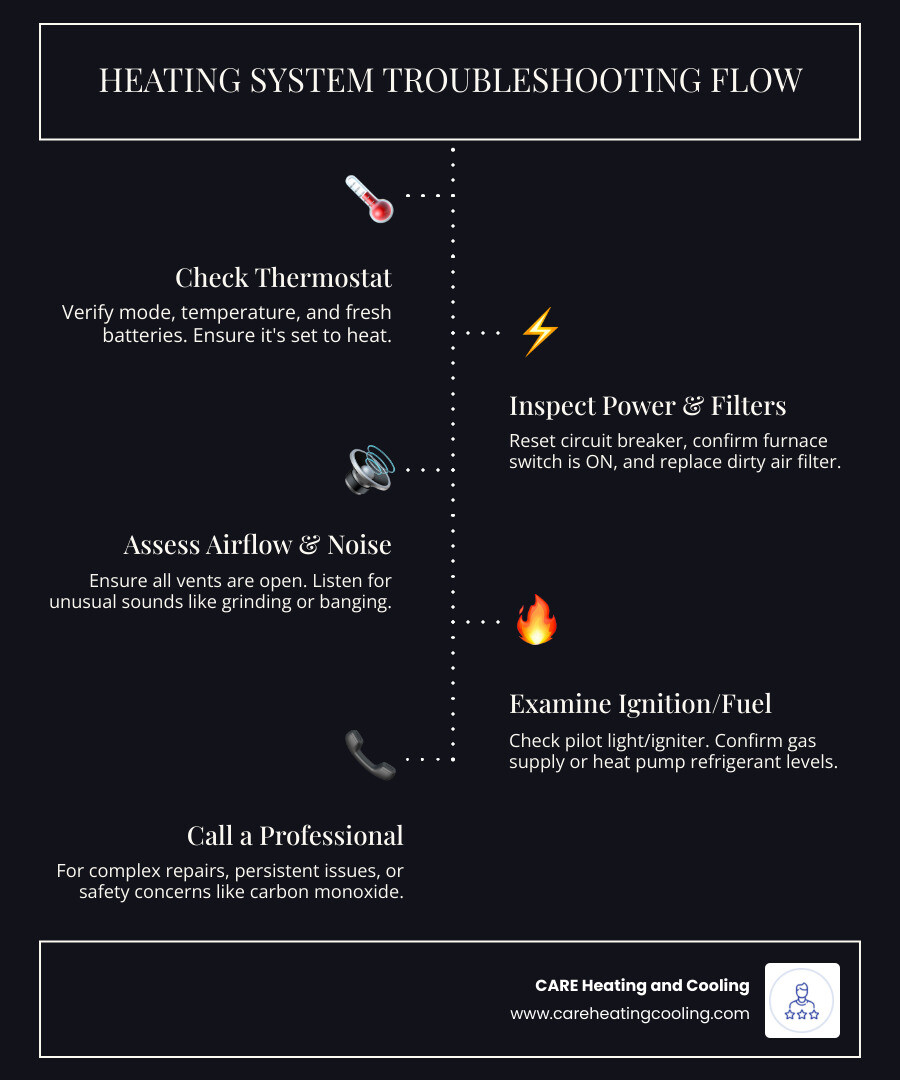
Check Your Thermostat
Start with your thermostat, the control center of your heating system. Even smart thermostats can have simple problems.
Dead batteries are a common reason a thermostat stops working. If your display is blank or acting strangely, try fresh batteries first.
Next, confirm your thermostat is set to “Heat” mode and the temperature is set higher than the current room temperature. It’s an obvious step, but one that’s easily overlooked.
Smart thermostats might lose their WiFi connection or need a quick restart. If you have an older heating system, your smart thermostat might not be getting enough power without a proper “C” wire installation.
Your thermostat’s location matters. If it’s in direct sunlight, near a lamp, or in a drafty spot, it can get false readings and think your house is warmer than it is.
These simple thermostat checks solve many heating system problems. For more detailed guidance, check out the signs that a thermostat might be malfunctioning.
Inspect Power and Filters
After checking the thermostat, make sure your heating system has power and can breathe properly.
Start at your circuit breaker panel. Find your furnace’s dedicated breaker and reset it by flipping it completely off, then back on.
Most heating systems also have a power switch on or near the unit itself, often resembling a light switch. Ensure it’s in the “On” position.
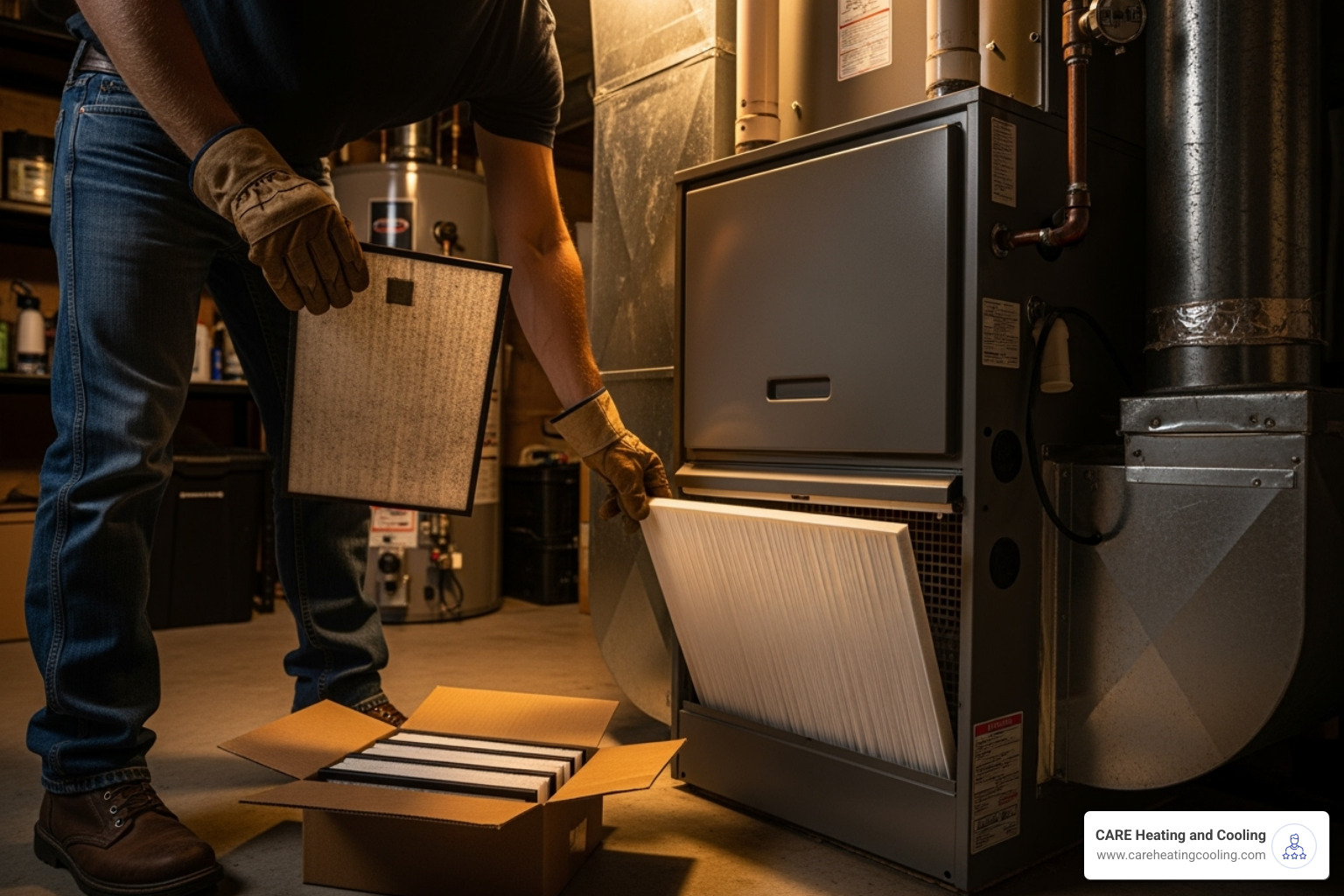
Now, check your air filter. A dirty, clogged filter is one of the most common causes of heating problems. It restricts airflow, forcing your furnace to work harder, which can cause it to overheat and shut down as a safety measure.
Ensure all supply and return vents are unblocked by furniture, curtains, or toys. Keep outdoor vents clear of snow and leaves.
For high-efficiency furnaces, check the condensation pan. An overflowing pan can shut the system down to prevent water damage. Empty it and ensure the drain line is clear.
These basic maintenance steps prevent many common issues. You can find more helpful tips in our guide on furnace maintenance tips for homeowners, and learn about other simple furnace fixes that homeowners can handle.
Taking care of these simple items not only solves immediate problems but also helps reduce your heating bills this winter by keeping your system running efficiently.
Diagnosing Common Heating System Problems by Symptom
If DIY checks fail, it’s time to diagnose the problem by its symptoms. Your heating system is telling you what’s wrong. Older systems (furnaces 15-20 years, heat pumps 10-12 years) are more prone to issues, especially in their final years.
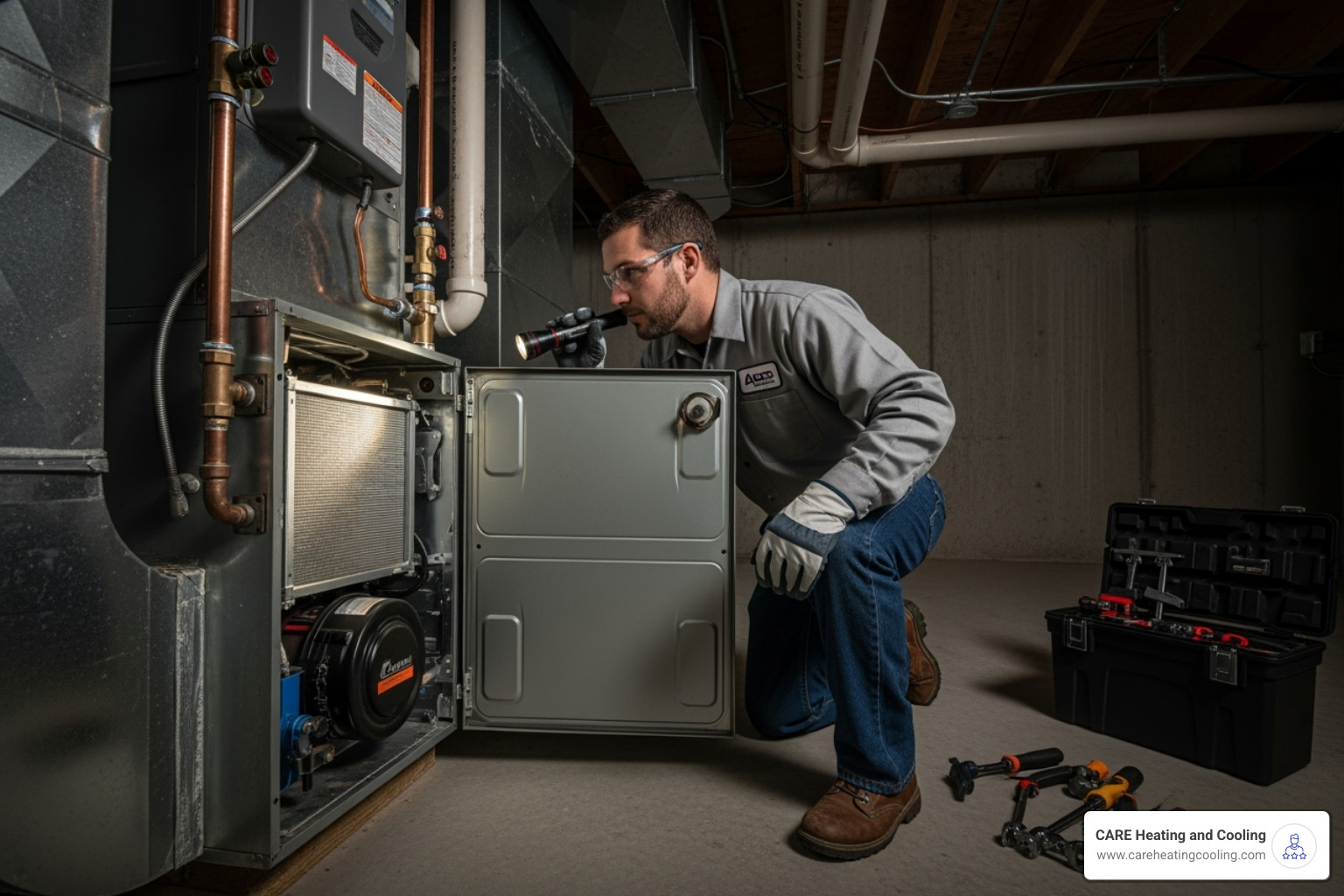
Understanding these symptoms helps you know when to call a professional. Ethical service means technicians are paid to fix your system, not just sell you a new one, ensuring honest solutions. For more insights into how professionals tackle these challenges, check out How Experts Handle Heating Repair.
Issue 1: No Heat or Not Enough Warmth
Dealing with no heat or insufficient warmth? Let’s investigate the common culprits.
Furnace ignition troubles are a primary suspect. Older furnaces (pre-2010) may have a standing pilot light that has gone out. You can sometimes relight it by following the owner’s manual safely.
Modern furnaces use electronic ignition. The igniter can get dirty or crack, and a faulty flame sensor can prevent the burner from staying lit. You may hear clicking but see no flame.
Check your gas supply. Ensure the furnace’s gas valve is open and check fuel levels for propane or oil systems.
Heat pumps have their own unique issues. Low refrigerant levels prevent effective heat transfer and require a professional. Heat pumps also struggle in temperatures below 40 b0F and rely on less efficient auxiliary heat below 25 b0F.
Watch for iced outdoor coils, as excessive ice blocks heat transfer. A stuck reversing valve can blow cold air when you want heat. Keep the outdoor unit clear of snow and debris.
Leaky ductwork is another problem. The average home loses 20-30% of its heated air through leaks, leaving you with cold spots.
If you’re experiencing these issues, it might be time for professional help. Check out the Signs You Need Furnace Service, and for heat pump owners, explore Common Heat Pump Repair Issues Solutions.
Issue 2: Airflow and Operational Glitches
Puzzling heating system problems like airflow glitches can be frustrating.
If your system won’t blow air even when running, the issue is likely the blower motor. It can fail due to motor problems, a broken belt, or a tripped limit switch.
Check your thermostat’s fan setting. If it’s on “ON” instead of “AUTO,” the fan runs continuously, circulating cold air when the furnace isn’t heating. Set it to “AUTO.”
Short cycling is when the system repeatedly turns on and off. This is often caused by overheating from a dirty filter or blocked vents. An oversized system, a faulty thermostat, or a blocked flue pipe can also cause it.
If your system won’t shut off, check if the thermostat fan is set to “ON.” A faulty limit switch, bad contactor, or thermostat malfunction could also be the cause.
These operational hiccups can be complex. For more details, explore Common Furnace Problems Call for Repair.
Issue 3: Troubleshooting Common Heating System Problems with Noises
Unusual noises are a clear sign of heating system problems.
- Grinding noises often indicate dry motor bearings that need lubrication to prevent motor failure.
- Squealing sounds usually point to a loose or worn blower belt that needs tightening or replacement.
- Banging or popping at startup often indicates delayed ignition, where gas builds up before igniting. This requires immediate professional attention. It can also be caused by expanding ductwork.
- Clicking without ignition often points to a faulty igniter or electrical relay.
- Rattling or vibrating can be caused by loose access panels, ductwork, or internal components. Ensure all panels are secure.
While these noises are worth investigating, a little professional TLC is often all that’s needed. Find out more about Expert Heating Repair Solutions.
Issue 4: Addressing Serious Heating System Problems: Leaks and Safety Alerts
Some heating system problems are serious safety risks that require immediate attention.
Burning smells can be normal or dangerous. A slight burning smell at the start of the season is usually just dust burning off the heat exchanger. However, if the smell persists, gets stronger, or smells like burning plastic, shut off your system and call a pro. It could be a dangerous wiring or motor issue.
Water leaks can be alarming. High-efficiency systems produce condensation, and a clogged condensate drain line can cause water to back up and leak. A whole-home humidifier could also be the source.
A cracked heat exchanger is one of the most dangerous problems. This component separates combustion gases from your home’s air. A crack can leak deadly carbon monoxide into your home. Warning signs include burning smells, soot on burners, or a yellow burner flame instead of blue.
Carbon monoxide is a colorless, odorless gas produced by incomplete fuel combustion. A cracked heat exchanger or damaged flue pipe can cause it to enter your home.
If your carbon monoxide detector goes off, evacuate immediately and call 911 or your gas company from a safe location. Do not re-enter until authorities declare it safe.
For additional information about gas-related safety issues, consult How to Identify and Fix Gas Line Leaks.
The Critical Role of Regular Maintenance
Like a car, your heating system needs regular tune-ups. Most common heating system problems are preventable with routine maintenance.
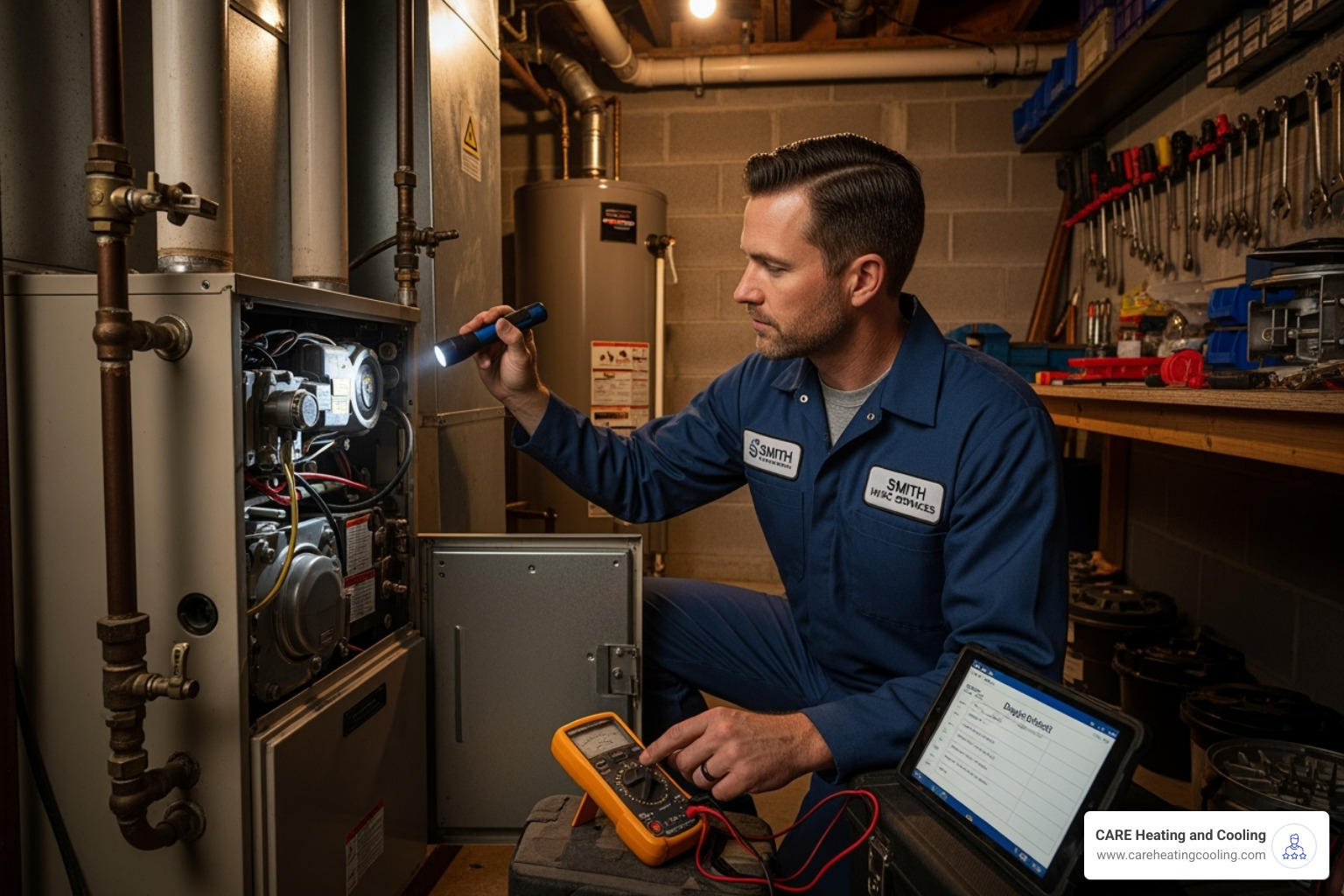
Think of maintenance as an annual physical for your HVAC system. Catching small problems early saves you from expensive major repairs.
Regular maintenance prevents most heating system problems. A technician can spot warning signs you’d miss, like a loose wire or a wearing component.
A well-tuned system also improves efficiency, lowering your energy bills because it doesn’t have to work as hard.
Regular care can extend its lifespan. Neglected systems often fail years earlier than their typical 15-20 year (furnace) or 10-12 year (heat pump) lifespan.
Most importantly, tune-ups include crucial safety checks for carbon monoxide leaks, gas pressure, and secure electrical connections.
During maintenance, technicians clean dirty components to prevent overheating and failure and check for excess moisture that can impact air quality.
We strongly recommend following a professional maintenance checklist and understanding the Importance of Regular Furnace Service for your home’s comfort and safety.
What a Tune-Up Includes
A professional tune-up is a comprehensive inspection of your system’s critical aspects.
- Component cleaning: The blower assembly, burners, and other internal parts are cleaned to remove buildup that hinders operation.
- Electrical connection check: Wires are inspected and connections are tightened to prevent inefficiency and fire hazards.
- Lubrication: Moving parts like motor bearings are lubricated to reduce friction and wear.
- Burner inspection: Technicians check for a clean, blue flame, ensuring efficient and safe fuel combustion. A yellow flame indicates a problem needing immediate attention.
- Heat exchanger check: This is a critical safety inspection for cracks or corrosion that could leak carbon monoxide.
- Thermostat calibration: This ensures your thermostat accurately controls your heating system, preventing discomfort and high energy bills.
These steps keep your system running safely, efficiently, and reliably. For more professional insights, check out Furnace Service Tips from Experts to learn what industry professionals recommend.
Frequently Asked Questions about Heating Issues
When your heating system acts up during an Ohio winter, you likely have questions. Here are answers to the most common ones we hear about heating system problems.
Why is my heater blowing cold air?
It’s puzzling when your heater runs but blows cold air. There are several common causes:
- Thermostat fan setting: If the fan is set to “ON” instead of “AUTO,” it runs continuously, circulating room-temperature air, which feels cold. Switch it to “AUTO.”
- Dirty air filter: A severely clogged filter can restrict airflow, causing the furnace to overheat and shut down the burners as a safety measure, while the fan continues to blow unheated air.
- Lack of fuel: For gas furnaces, ensure the gas supply valve is open. For oil or propane, check your fuel levels.
- Ignition failure: An extinguished pilot light (older furnaces) or a failed electronic igniter (newer models) will prevent the burners from lighting.
- Leaky ducts: Significant duct leaks can cause so much heat loss that the air feels cool by the time it reaches your vents.
You can find more detailed solutions in our guide on Heating Repair Problems and Solutions.
What causes a furnace to short cycle?
Short cycling is when your furnace repeatedly turns on and off for short periods. It’s one of the most common heating system problems.
- Restricted airflow: The most common cause is a clogged filter, which restricts airflow and causes the system to overheat, triggering a safety shutdown.
- Oversized furnace: A furnace that’s too powerful for your home will heat the space too quickly and shut off, repeating the cycle as the temperature drops again.
- Faulty thermostat: The thermostat may be misreading temperatures or be poorly located. If it’s in a drafty spot or near a heat source, it can get false readings.
- Faulty limit switch: A malfunctioning overheating limit switch can shut the system down unnecessarily.
- Blocked exhaust vent: For high-efficiency furnaces, a blocked flue pipe will trigger a safety shutdown.
- Flame sensor defects: A dirty or failing flame sensor may not detect the flame, causing the furnace to shut off.
We see these issues frequently in our Westerville area, and you can learn more about local solutions in our HVAC Problems and Solutions Westerville guide.
How often should I replace my furnace filter?
This is a key question for preventing heating system problems. A clean filter is crucial for your furnace’s health.
The general rule is every 1-3 months, but this varies based on several factors:
- Pets: If you have pets, change the filter monthly.
- Allergies: For households with allergies, change it monthly to improve air quality.
- System usage: During peak heating season, check it more often.
- Number of people: More occupants mean the filter will get dirty faster.
- Renovations: Recent construction or renovations will clog a filter quickly.
Pro tip: Check your filter monthly. If you can’t see light through it, it’s time for a new one. This simple habit prevents many expensive problems and is one of the easiest ways to keep your system running smoothly. For more energy-saving tips, check out our Five Tips to Improve Home Heating Efficiency in Columbus.
When You Need an Ethical, Expert Repair
While some heating system problems are DIY-friendly, many require professional expertise for safety and accuracy.
DIY limitations are about safety. While changing a filter is safe, tasks involving gas lines, complex electrical parts, or internal components should be left to pros.
The safety risks are serious. Carbon monoxide leaks, gas line issues, and faulty electrical connections are emergencies. If you smell gas or your CO detector goes off, evacuate and call for help immediately.
Modern systems have complex electrical parts like control boards and sensors that require specialized tools to diagnose and repair safely. DIY attempts can cause more damage.
The signs of a failing system often point to a larger issue than a single repair. Frequent breakdowns, especially as a system ages (15-20 years for furnaces, 10-12 for heat pumps), are a major red flag.
- Age of your unit: As systems get older, parts become harder to find and more expensive, leading to a cascade of failures.
- Increased repair frequency: Frequent repairs and rising energy bills despite maintenance are clear signs your system is nearing the end of its life.
At CARE Heating and Cooling, our reputation is built on integrity. As a BBB Torch Award for Ethics winner, we’re committed to honest service. Our technicians are paid to fix units, not to sell new ones, so our focus is on solving your problem, not on a sales pitch.
This approach ensures customer-centric solutions and high satisfaction. We’ll repair your system if it’s cost-effective or provide an honest recommendation for replacement if it’s not.
Don’t let heating system problems leave you in the cold. If DIY troubleshooting fails or you suspect a safety issue, call the professionals. We’re here to restore your home’s comfort safely and affordably.
Ready to get your heating system back on track? Schedule your furnace repair in Columbus, OH today, and let our ethical, expert team take care of you.