
How Ohio Weather Extremes Affect Your HVAC — and Why It Matters for Your Home
How Ohio weather extremes affect your HVAC is one of the most important things Columbus-area homeowners can understand — because Ohio’s climate doesn’t play fair. Summers bring sweltering heatwaves, with Columbus recording 35 days above 90°F in 2024 alone. Winters deliver heavy snow, hard freezes, and relentless freeze-thaw cycles. And in between? Rapid temperature swings that can flip from 80°F to frost warnings within days.
Every one of those shifts puts real stress on your heating and cooling system.
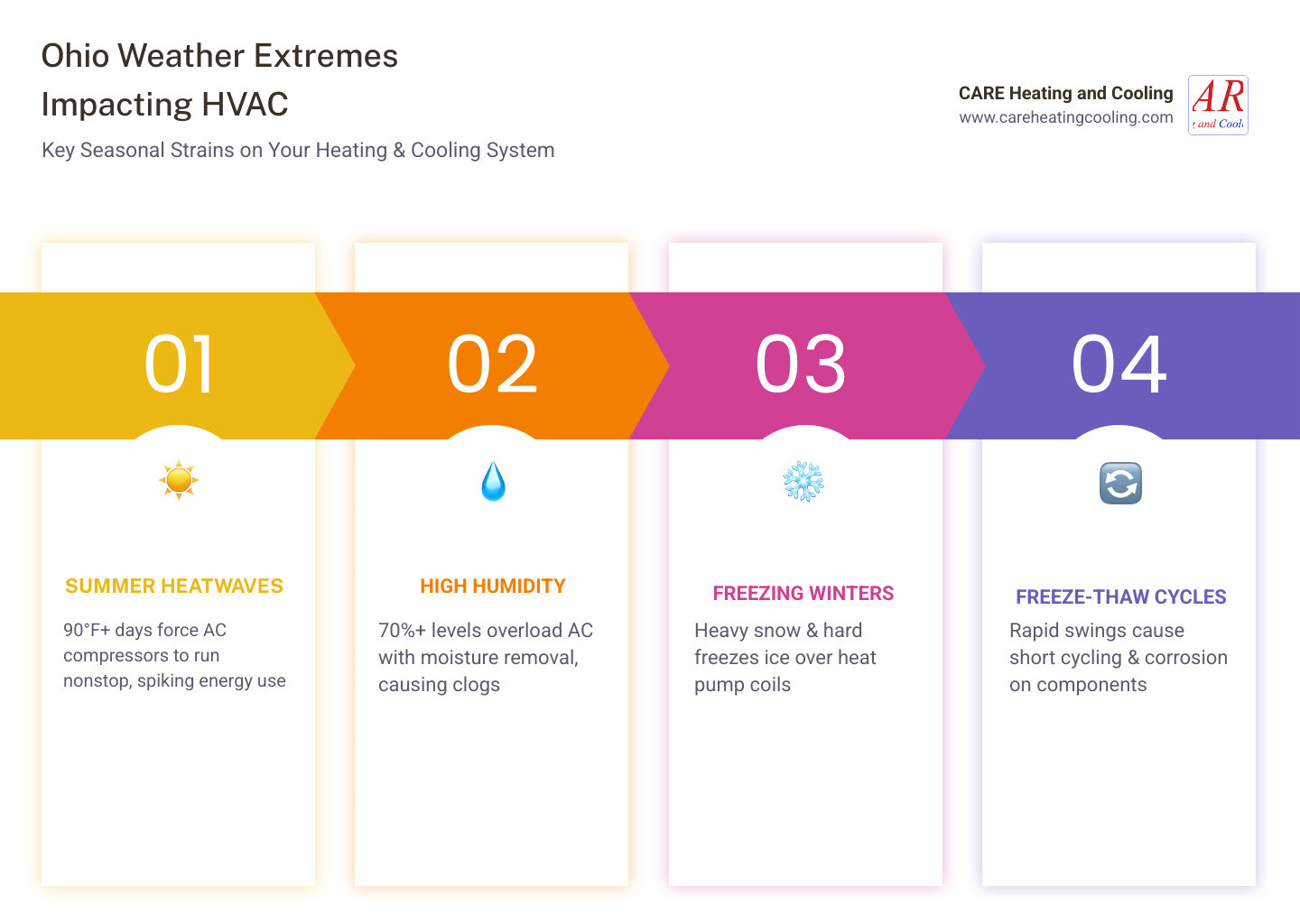
Here’s a quick look at how Ohio’s seasonal extremes impact your HVAC:
- Summer heatwaves force air conditioners to run almost nonstop, straining compressors and refrigerant levels
- High humidity (often topping 70% in summer) makes your AC work harder to remove moisture from the air, not just cool it
- Freezing winters push furnaces to their limits and can cause heat pump coils to ice over
- Freeze-thaw cycles stress outdoor components, accelerate corrosion, and increase the risk of pipe and drainage issues
- Rapid temperature swings cause short cycling — where your system turns on and off too frequently — wearing out parts faster
- Storms and power surges can damage electrical components and clog outdoor units with debris
- Poor insulation and leaky ducts magnify every one of these problems, making your system work even harder
And here’s what makes it worse: small underlying issues — a dirty filter, a minor refrigerant leak, a clogged condensate line — become much bigger problems when extreme weather hits. Ohio’s climate doesn’t create HVAC problems so much as it reveals them, often at the worst possible moment.
How Ohio Weather Extremes Affect Your HVAC During Summer Heatwaves

When July and August hit Central Ohio, “hot” is an understatement. We’ve seen a significant increase in extreme heat events recently. In fact, Columbus experienced 35 days above 90°F in 2024, a trend that continues to push our cooling systems to the brink. For homeowners in places like Hilliard or Upper Arlington, these heatwaves mean your air conditioner isn’t just a luxury; it’s a vital piece of home safety equipment.
During these peaks, your AC unit might run for 12 to 18 hours a day. This constant operation accelerates the wear and tear on the compressor—the heart of your system. If your unit is older or hasn’t been maintained, this is when the “ghost in the machine” usually appears. To keep things running smoothly, following Heat Pump Maintenance Tips For Summer/ is essential for those using dual-fuel or electric systems.
Furthermore, we have to consider the “Urban Heat Island” effect. In more densely packed Columbus neighborhoods, temperatures can stay up to 14 degrees higher than in surrounding rural areas. This means if you live near the city center, your HVAC is fighting a much tougher battle than a system in a more open area like Galena. We often recommend Summer Energy Saving Tips For Ohio Homeowners/ to help mitigate these rising energy demands without sacrificing comfort. One of the most common issues we see during these times is frozen coils. It sounds counterintuitive, but if airflow is restricted by a dirty filter or low refrigerant during a heatwave, the system can actually ice over. You can learn more about how to Prevent Ac Freezing During Hot Weather/ to avoid a sudden shutdown when it’s 95°F outside.
Managing High Humidity and AC Strain
Ohio is famous for that “air you can wear.” When humidity levels top 70%, your air conditioner has a double job: it has to lower the temperature and pull gallons of water out of the air. This moisture is collected by the evaporator coils and sent down a condensate drain line.
If that drain line is clogged with dust or algae, that water has nowhere to go but back into your home—or worse, it triggers a safety switch that shuts your system down entirely. High humidity also makes the air feel warmer than it actually is, often tempting homeowners to “crank it down” to 68°F, which only adds to the mechanical strain. We always suggest that you Turn On Your Air Conditioner Today/ as soon as the first humid spring day hits to ensure the drainage system is clear before the real “dog days” of summer arrive.
Signs of Summer System Fatigue
How do you know if the Ohio heat is winning? Keep an eye out for these red flags:
- Short Cycling: The unit turns on and off every few minutes. This is often a sign of overheating or a failing capacitor.
- Uneven Temperatures: The upstairs is a sauna while the basement is a refrigerator. This indicates your system is struggling to push air through the ductwork effectively.
- Rising Energy Bills: If your bill jumps significantly more than your neighbors’, your system’s efficiency may have dropped. Even a 5% drop in efficiency can lead to hundreds of extra dollars in energy costs over a season.
- Refrigerant Leaks: If the air coming out of the vents is lukewarm, the extreme pressure of a heatwave may have exposed a small pinhole leak in your coils.
Navigating Freezing Winters and the Freeze-Thaw Cycle
If summer is a marathon for your HVAC, winter is a heavyweight boxing match. Ohio winters are notorious for their volatility. One day it’s 45°F and raining; the next, it’s -5°F with a wind chill that makes you want to hibernate. These “freeze-thaw” cycles are particularly hard on outdoor equipment.
When snow and ice accumulate on your outdoor unit, it can block airflow. For furnaces, the biggest danger is often the venting. High-efficiency furnaces use PVC pipes to vent exhaust; if these get blocked by drifting snow in a place like Dublin or Powell, the system will shut down for safety to prevent carbon monoxide buildup. Reviewing Winter Furnace Safety Tips/ is a great way to stay ahead of these risks.
Why Ohio Weather Extremes Affect Your HVAC Heat Pump Performance
For our neighbors in Westerville or New Albany who use heat pumps, winter brings a specific challenge: the defrost cycle. A heat pump works by extracting heat from the outdoor air (yes, even cold air has some heat!). As it does this, the outdoor coils get very cold and naturally frost over.
Usually, the system enters a “defrost mode” to melt this ice. However, if the weather stays below freezing for too long or if there is heavy sleet, the ice can become too thick for the system to handle alone. This is often Why Heat Pump Freezes Up In Spring/ or during those late-winter cold snaps. If your heat pump is struggling, you might notice it switching to “Emergency Heat” or “Auxiliary Heat” more often, which is much less efficient. For those considering an upgrade, a Heat Pump For Spring Weather In Dublin/ can provide a more balanced approach to these transitional temperature swings.
Combatting Dry Indoor Winter Air
While summer is too wet, winter is too dry. When we crank up the furnace to fight a Polar Vortex, the indoor humidity can drop below 15%—dryer than the Sahara Desert! This leads to static electricity, itchy skin, and even damage to wood floors and furniture.
Ideally, you want your home to stay in the 30–50% humidity range. Not only is this better for your health, but moist air actually holds heat better, meaning you can stay comfortable at a slightly lower thermostat setting. We’ve written extensively about managing Dry Indoor Winter Air and understanding the nuances of Humidity In Winter to help you find that perfect balance.
The Critical Role of Proper Sizing and Maintenance in Variable Climates
One of the biggest mistakes we see in Central Ohio is “guesstimating” system size. Many people think “bigger is better,” but in our climate, an oversized system is a recipe for disaster. If a unit is too large for your Grove City home, it will reach the target temperature too quickly and shut off. This prevents it from properly dehumidifying the air in the summer, leaving you feeling clammy and cold.
We use Manual J calculations, which take into account your home’s square footage, insulation levels, window types, and even the direction your house faces. This ensures your system has the exact heating capacity and cooling tons needed to handle a 95-degree day in July and a sub-zero night in January. If you’re in the market for a new system, check out our Heat Pump Installation Westerville Guide/ for a deeper look at how we size these systems for local homes.
How Ohio Weather Extremes Affect Your HVAC Efficiency and Lifespan
Think of your HVAC system like a car. If you only drove it on flat, 70-degree days, it would last forever. But Ohio weather is like driving that car up a mountain in a blizzard. The constant expansion and contraction of metal parts during temperature swings can lead to refrigerant leaks and cracked heat exchangers over time.
Blower motors and capacitors are also under constant stress. During a spring storm in Delaware, power surges can fry sensitive circuit boards. This is why Spring Ac Maintenance In Dublin/ is so critical. A simple tune-up can catch a fraying belt or a failing electrical component before it leaves you stranded. Regular Spring Ac Maintenance Keep System Running/ is the best way to extend the lifespan of your investment, ensuring it lasts 15 years instead of 10.
When to Call a Professional for Weather-Related Repairs
We know Buckeye homeowners are a hardy bunch who love a DIY project, but some things require a professional eye. You should give us a call if you notice:
- Weak Airflow: This could mean a failing blower motor or a major ductwork leak.
- Unusual Noises: Banging, screeching, or humming often points to mechanical failure that will only get worse if ignored.
- Persistent Odors: A “dirty sock” smell usually indicates mold or bacteria growth in the coils due to high humidity.
- Diagnostic Alerts: If your smart thermostat is throwing error codes, don’t just reset it—there’s usually an underlying cause related to system pressure or temperature.
Proactive Steps to Shield Your Home from Climate Shifts
You can’t change the weather in Pataskala or Pickerington, but you can change how your home responds to it. The “envelope” of your home—your insulation and air sealing—is the first line of defense for your HVAC. If you have leaky windows or a poorly insulated attic, your furnace is essentially trying to heat the whole neighborhood.
Before the spring rains hit, it’s wise to Prepare Ac For Spring In Delaware by clearing debris from around your outdoor unit. Leaves, sticks, and “cottonwood” seeds from Ohio’s trees can clog your condenser coils, forcing the system to work twice as hard.
Seasonal Maintenance Comparison
To help you stay organized, here is a quick breakdown of what your system needs as the seasons shift:
| Task | Spring (Prep for Heat) | Fall (Prep for Cold) |
|---|---|---|
| Filter Change | Essential (Pollen Season) | Essential (Dust/Pet Dander) |
| Outdoor Unit | Clear 18″ of debris | Check for snow/ice clearance |
| Coil Cleaning | Clean evaporator/condenser | N/A |
| Electrical | Check capacitors & surges | Inspect igniter & flame sensor |
| Drainage | Flush condensate lines | Check humidifier pad |
| Safety | Check refrigerant levels | Carbon monoxide testing |
Smart Technology for Extreme Weather Management
In 2026, we have more tools than ever to fight climate extremes. Smart thermostats are a game-changer for Ohioans. They can track local weather forecasts and adjust your home’s temperature proactively. For example, if a heatwave is predicted for Columbus, your thermostat can “pre-cool” your home in the early morning when electricity demand is lower and the system doesn’t have to work as hard.
High-efficiency filters (MERV 11 or higher) are also vital, especially during Ohio’s intense spring allergy seasons. These filters keep the internal components of your HVAC clean, which maintains airflow and efficiency. Just remember to check them monthly; during extreme weather, a filter can clog much faster than you’d expect!
Frequently Asked Questions about Ohio Weather and HVAC
When is the best time to schedule a seasonal tune-up in Ohio?
The “sweet spots” are early spring (March/April) and early fall (September/October). You want to beat the rush. Once the first 90-degree day hits, every HVAC company in Central Ohio gets flooded with emergency calls. By scheduling early, you ensure your system is vetted and ready before the extreme stress begins.
How do Ohio weather extremes affect your HVAC during a power outage?
Summer thunderstorms and winter ice storms often knock out power in areas like Blacklick or Canal Winchester. When the power flickers or surges, it can damage the sensitive electronics in modern high-efficiency units. We highly recommend installing a dedicated HVAC surge protector. Once power is restored, if your system doesn’t kick back on after a few minutes, check your breaker panel first. If it trips again, call a pro—don’t keep flipping it!
Does the Columbus urban heat island effect really impact my energy bills?
Absolutely. A 2022 study found a 14-degree temperature disparity across different Columbus neighborhoods. If you live in a “heat island,” your AC will likely run several hours longer than a unit in a rural, shaded area. This makes insulation, reflective roofing, and regular maintenance even more critical for city dwellers to keep their energy bills manageable.
Conclusion: Trusting the Experts at CARE Heating and Cooling
Living in the Buckeye State means embracing the beauty of all four seasons—and the chaos they sometimes bring. Understanding how Ohio weather extremes affect your HVAC is the first step toward a more comfortable, efficient home.
At CARE Heating and Cooling, we’ve spent years serving our neighbors from Bexley to Worthington. We’ve seen every type of weather-related failure imaginable, and we know exactly how to prevent them. As a BBB Torch Award for Ethics winner, our philosophy is simple: we are here to help, not to sell. Our technicians are paid to fix your unit, ensuring you get the most life out of your existing system.
Whether you need a quick spring tune-up or a full system replacement designed for Ohio’s unique climate, we are ready to help. Don’t wait for the next heatwave or blizzard to find out if your system is up to the task. If you’re looking for HVAC Westerville OH or service anywhere in the greater Columbus area, give us a call today. Let’s make sure your home remains a sanctuary, no matter what the Ohio sky decides to do next.