Why HVAC Service Agreements Matter for Your Home Comfort and Budget
An HVAC service agreement is a contract with an HVAC company for regular maintenance and repair services for your heating and cooling system. Think of it as a subscription plan to keep your system running smoothly.
Quick Answer: What You Need to Know About HVAC Service Agreements
- What it is: A maintenance contract that includes regular tune-ups, inspections, and often repair coverage
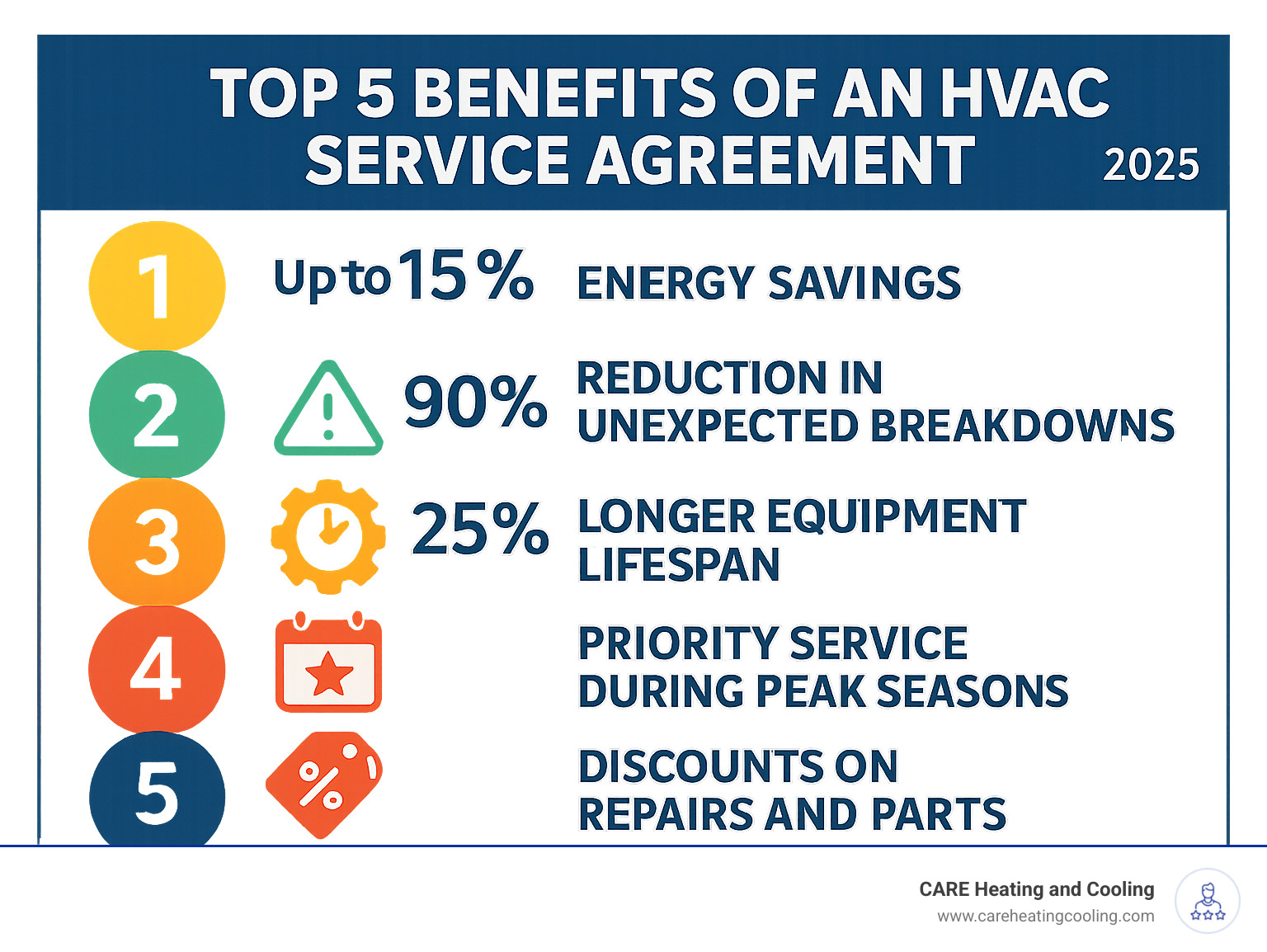
- Key benefits: Lower energy bills (up to 15% savings), fewer breakdowns (90% reduction), and longer equipment life (25% extension)
- What’s included: Annual inspections, cleaning, filter changes, priority service, and discounts on repairs
- Cost vs. value: Often costs less than a single emergency repair call
- Best for: Any homeowner who wants reliable comfort and wants to avoid surprise repair bills
Your HVAC system works hard to keep you comfortable, but without regular care, it can break down during a heat wave or winter freeze.
Regular maintenance prevents costly surprises. As one HVAC expert notes, a premature breakdown is both frustrating and expensive. Proactive care saves thousands compared to reactive repairs, which often involve emergency rates and uncomfortable waits.
What is an HVAC Service Agreement and How Does it Differ from a Warranty?
An HVAC service agreement is a contract for proactive care, unlike the reactive “fix it when it breaks” approach. It’s all about prevention over panic. By subscribing to regular maintenance from trained technicians, you ensure your system gets the attention it needs before small issues become costly disasters—much like getting regular oil changes for your car to avoid engine failure.
| Feature | HVAC Service Agreement | Manufacturer’s Warranty |
|---|---|---|
| Purpose | Proactive maintenance, system optimization, preventative care | Covers manufacturing defects in parts |
| Coverage | Routine inspections, cleaning, tune-ups, labor discounts, parts discounts, priority service | Original parts, materials, and workmanship |
| What it prevents | Breakdowns, high energy bills, premature system failure | Cost of replacing defective factory parts |
| Frequency | Scheduled periodic visits (e.g., annually, bi-annually) | One-time coverage for a set duration (e.g., 5-10 years) |
| Maintenance Impact | Ensures system efficiency and longevity, often required to keep warranty valid | Can be voided if regular maintenance is not performed |
| Emergency Service | Often includes priority or 24/7 emergency response | Typically does not include emergency service or labor |
Understanding the Importance of AC Tune-Ups helps you see why regular maintenance matters so much for your system’s health.
Understanding Your Manufacturer’s Warranty
Your manufacturer’s warranty is a safety net for specific failures. When you buy a new HVAC system, the manufacturer promises their equipment won’t fail due to factory defects in materials and workmanship.
However, the warranty doesn’t cover labor costs for repairs or regular maintenance. Crucially, most warranties require professional maintenance to remain valid; skipping tune-ups can void your coverage. The warranty also won’t help with normal wear and tear or issues from poor installation or neglect. It protects against manufacturing mistakes, not everyday issues.
Understanding Your HVAC Service Agreement
This is where an HVAC service agreement shines. While a warranty is passive, a service agreement actively works to keep your system healthy. Regular maintenance visits are the core of the agreement. These thorough examinations catch problems early, when they are small and affordable, and your technician becomes familiar with your system.
Most agreements include discounted labor rates, parts discounts, and valuable priority service during peak seasons. The regular inspections also keep your manufacturer’s warranty valid. Learn what regular maintenance can prevent by reading about Common HVAC Repair Issues and Solutions.
Your HVAC service agreement and manufacturer’s warranty are a perfect team, providing comprehensive protection for your investment.
The Financial and Performance Benefits of Regular HVAC Maintenance
Think of your HVAC system like your car – it’s a major investment that needs regular care to perform its best. Investing in an HVAC service agreement is a smart financial move that keeps more money in your pocket while your family stays comfortable year-round.

Boost Energy Efficiency and Lower Utility Bills
Your HVAC system uses more than 40% of your home’s total energy, but regular maintenance can slash that use by up to 15%. Over time, dust and debris build up on coils and clog filters, forcing your system to work overtime. This is like trying to breathe through a stuffed-up nose—everything becomes harder.
With an HVAC service agreement, our technicians give your system a deep cleaning. We replace dirty filters, clean coils, and fine-tune controls so it runs smoothly. A clean, well-adjusted system uses less energy, saving you money every month. Check out our Top Tips for Effective AC Maintenance to see what makes a difference.
Extend Equipment Lifespan and Prevent Costly Breakdowns
Nobody wants to replace their HVAC system unexpectedly. The good news: regular maintenance can extend your system’s life by up to 25%. That’s several extra years before you face replacement costs.
Even better, preventative maintenance can reduce breakdowns by up to 90%. During routine visits, our technicians act like detectives, spotting loose electrical connections, minor refrigerant leaks, or a worn belt before it snaps on the hottest day of summer. These small fixes cost a fraction of emergency repairs and save you the stress of an unexpected breakdown. Learn what warning signs to watch for in our guide on Signs You Need Furnace Service.
Improve Indoor Air Quality for a Healthier Home
Your HVAC system is also your home’s main air cleaner. According to the EPA, proper ventilation with filtration is key to good indoor air quality.
An HVAC service agreement helps your family breathe easier. During each visit, we replace dirty air filters that trap dust, dander, and pollen, and we inspect and clean ductwork and coils where mold can hide. This makes a real difference for family members with allergies or asthma. A well-maintained system also helps control humidity levels and improves air circulation, reducing stuffy areas where allergens build up. For more ways to keep your system running its best, read our Furnace Maintenance Tips for Homeowners.
What Should Be Included in a Comprehensive HVAC Maintenance Agreement?
When you’re looking at an HVAC service agreement, think of it as your roadmap to worry-free home comfort. The best agreements don’t leave you guessing – they spell out exactly what you’re getting, when you’re getting it, and what happens if something goes wrong.
A good service agreement is like a recipe. You want all the ingredients listed clearly so there are no surprises later. This transparency protects both you and your HVAC company, creating a partnership built on trust and clear expectations.
LIST of Key Services and a Maintenance Checklist
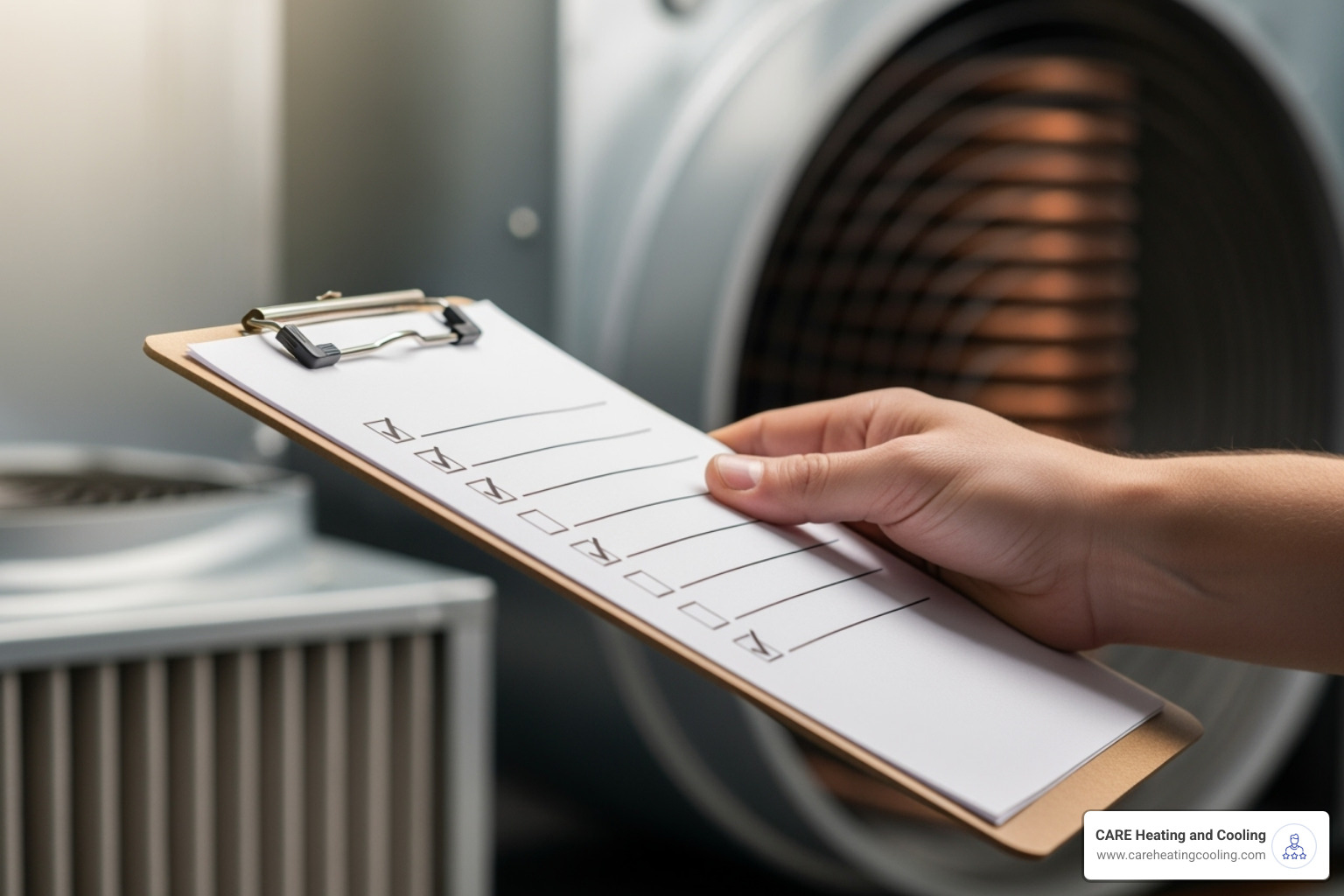
Your HVAC service agreement should read like a thorough health checkup for your system. Every important component gets attention, and nothing gets overlooked. Here’s what we typically include when we visit your home:
Spring AC Tune-Up Services:
Our spring visits focus on getting your cooling system ready for the hot months ahead. We start by cleaning or replacing your air filters – this simple step alone can dramatically improve your air quality and system efficiency. Next, we inspect and clean your condenser and evaporator coils because dirty coils make your system work much harder than it should.
We also check refrigerant levels to ensure your system can cool effectively, and clean the condensate drain line to prevent water damage and mold growth. Our technicians inspect all electrical connections for safety and proper function, then lubricate moving parts to reduce wear and extend motor life.
Don’t worry – we don’t forget the details either. We test your thermostat to make sure it’s reading temperatures correctly, check fan motors and blades for proper operation, and measure airflow and temperature differential to verify your system is performing as it should. We’ll even inspect your ductwork for leaks that waste energy. You can learn more about our comprehensive AC Tune-Up Services.
Fall Furnace Tune-Up Services:
When autumn arrives, we shift our focus to your heating system. We inspect and clean burners to ensure efficient combustion and check the heat exchanger for any cracks or damage – this is a critical safety check that prevents carbon monoxide leaks.
Our technicians test the ignition system for reliable startup and inspect gas lines and connections for any potential leaks. We measure gas pressure to ensure optimal fuel combustion and check the exhaust system and flue pipe to make sure combustion byproducts vent properly.
Safety is always our top priority, so we inspect all electrical components, lubricate moving parts to prevent premature wear, test thermostat functionality, and measure carbon monoxide levels – because your family’s safety is never negotiable. Our detailed Furnace Maintenance services ensure your heating system runs safely and efficiently all winter long.
A transparent agreement will clearly distinguish between what’s included in your regular service and what might require an additional charge. For instance, while filter changes are typically part of your agreement, extensive duct cleaning might be a separate service.
Essential Legal and Contractual Elements
Your HVAC service agreement isn’t just a handshake deal – it’s a legal document that protects both you and your service provider. Think of these contractual elements as the fine print that actually matters.
The agreement should clearly identify everyone involved – your full name, address, and contact information, plus the same details for your HVAC company. It should state upfront that this contract covers HVAC maintenance and repair services, so there’s no confusion about the purpose.
Service details matter most. Your agreement should spell out exactly what maintenance tasks will be performed, how often visits will occur, and what emergency services are available. The schedule should be crystal clear – whether it’s annual, bi-annual, or seasonal visits, you should know exactly when to expect your technician.
Contract terms and payment details need to be straightforward. This includes the contract duration, how either party can end the agreement, total costs, payment schedules, and any late payment penalties. Nobody likes surprises when it comes to money.
Warranty and liability clauses protect everyone involved. These sections explain what warranties come with parts and labor, plus reasonable limits on the contractor’s liability for things beyond their control – like natural disasters or damage caused by neglect.
Your agreement should also cover practical matters like how you’ll resolve any disagreements, requirements for safe access to your equipment, and confirmation that your contractor carries proper insurance. These details might seem boring, but they’re what make the difference between a smooth partnership and potential headaches down the road.
At CARE Heating and Cooling, we believe in complete transparency. Our Service Agreements are designed to give you peace of mind, not create confusion. When you know exactly what to expect, you can relax and enjoy the comfort of a well-maintained HVAC system.
For more information about our comprehensive approach to HVAC care, check out our Essential HVAC Services We Provide.
The Risks of Neglecting Your HVAC System
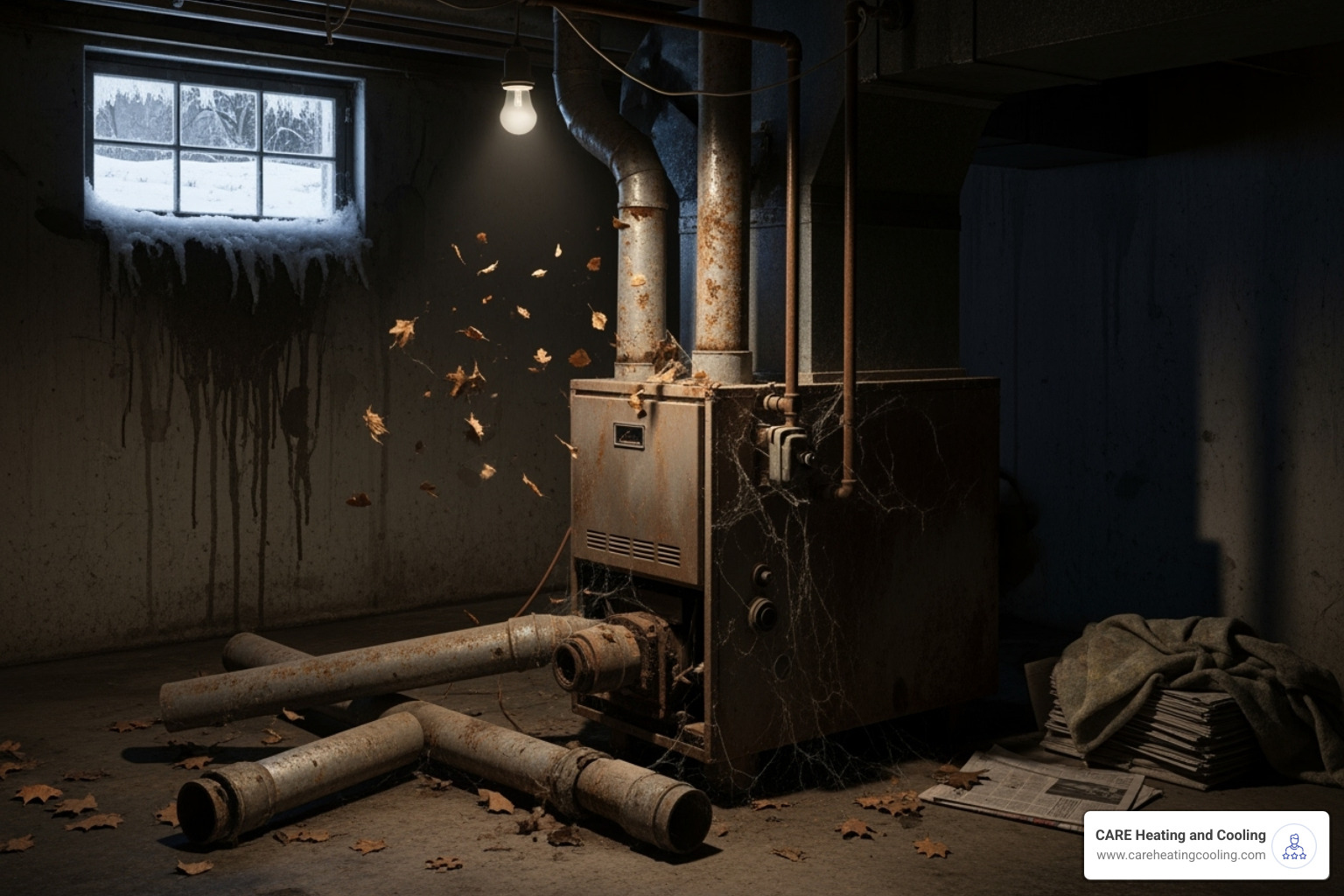
Picture this: It’s the middle of January, snow is falling, and your furnace decides to take a permanent vacation. Or maybe it’s July, the temperature is soaring, and your air conditioner gives up just when you need it most. These scenarios aren’t just inconvenient—they’re expensive, stressful, and completely avoidable with proper care.
When you skip regular maintenance, you’re essentially playing a risky game of chance with your home’s comfort system. The house always wins, and unfortunately, that means you lose.
Financial Risks and Unexpected Costs
Let’s talk about what neglect really costs you. Without an HVAC service agreement, you’re setting yourself up for some unpleasant financial surprises.
Emergency repairs hit when you least expect them. Murphy’s Law seems to apply especially well to HVAC systems—they break down at the worst possible moments. When your system fails on a scorching summer day or during a winter storm, you’re not just dealing with discomfort. You’re facing emergency service fees that can be double or triple the normal rates. Plus, you might wait days for a technician while everyone else is calling for help too.
Your monthly energy bills start creeping up long before your system completely fails. A dirty system works harder to keep your home comfortable, and that extra effort shows up on your utility bill every month. Those seemingly small increases add up to hundreds of dollars over time.
Premature system replacement is perhaps the biggest financial hit. What could have been caught and fixed during a routine tune-up becomes a major component failure. Instead of a small repair bill, you’re suddenly looking at replacing your entire system years earlier than necessary. That’s thousands of dollars you didn’t plan to spend.
Here’s something many homeowners don’t realize: your manufacturer’s warranty might be worthless if you haven’t kept up with professional maintenance. Most warranties require proof of annual service to remain valid. Skip the maintenance, and you could find yourself paying full price for repairs that should have been covered.
Don’t wait for problems to announce themselves. Learn to spot the Top Signs You Need HVAC Repair before they become emergencies.
Health and Safety Concerns
The financial risks are serious, but the health and safety concerns are even more important. Your HVAC system does more than control temperature—it affects the air your family breathes every day.
Poor indoor air quality develops gradually when filters aren’t changed and components aren’t cleaned. Dust, allergens, pet dander, and even mold spores build up in your system and get circulated throughout your home. If someone in your family has asthma or allergies, a neglected HVAC system can make their symptoms much worse.
Carbon monoxide leaks are a silent but deadly risk with gas furnaces. When heat exchangers develop cracks—often due to years of neglect—this odorless, colorless gas can seep into your home. Carbon monoxide poisoning can cause headaches, dizziness, and in severe cases, death. This is why professional furnace inspections are so critical for your family’s safety.
Mold and mildew growth thrives in the dark, damp conditions created when condensate drains get clogged. Once mold takes hold in your system, it spreads throughout your home every time the blower runs. This creates musty odors and can trigger respiratory problems for sensitive family members.
Fire hazards increase when electrical connections loosen, components overheat, or debris accumulates around your system. These dangerous conditions develop slowly over time, which is why regular professional inspections are so important.
Your family’s safety is too important to leave to chance. Understanding Why Furnace Maintenance is Important helps you see that regular care isn’t just about comfort—it’s about protecting the people you love most.
Frequently Asked Questions about HVAC Service Agreements
We get a lot of questions from homeowners who are considering an HVAC service agreement. It’s natural to want to understand exactly what you’re signing up for before making this important decision for your home’s comfort and your family’s budget.
Are HVAC service agreements worth it for a new system?
This might surprise you, but yes – an HVAC service agreement is actually more valuable when you have a brand-new system, not less!
Here’s the thing: your shiny new HVAC system came with a manufacturer’s warranty, right? Well, that warranty likely has some fine print that requires you to keep up with professional maintenance. Skip those annual tune-ups, and you could void your warranty entirely. That’s a costly mistake that an HVAC service agreement prevents.
Your new system deserves the best start possible. Even though it’s new, regular maintenance ensures it stays running at peak efficiency from day one. Think of it like buying a new car – you wouldn’t skip the first oil change just because it’s new, would you?
Plus, even new installations can have minor adjustments or quirks that our experienced technicians can catch early. It’s much better to address these small issues during a routine visit than to find them during an emergency breakdown.
Building a relationship with a trusted HVAC company right from the start means we get to know your specific system inside and out. When you do need service down the road, we’ll already be familiar with your equipment and your home’s unique needs.
How much does an HVAC service agreement typically cost?
The cost of an HVAC service agreement varies depending on what you need. If you have just a furnace, just an AC unit, or a complete heating and cooling system, the pricing will reflect that difference. More complex systems or comprehensive plans with extra perks like parts discounts will naturally cost more than basic maintenance-only agreements.
Here’s what we can tell you: the annual cost is typically less than what you’d pay for a single emergency repair call. When your furnace decides to quit on the coldest night of the year, that emergency service fee alone often exceeds what you’d pay for an entire year of preventive care.
Most HVAC companies offer flexible payment options to fit different budgets. You might choose to pay monthly or annually – whatever works better for your family’s financial planning. Many providers also offer tiered plans, so you can choose the level of coverage that makes sense for your situation and budget.
The real value comes from everything you don’t have to pay for: those surprise repair bills, higher energy costs from an inefficient system, and the premature replacement of equipment that could have lasted years longer with proper care.
Can I perform HVAC maintenance myself?
You absolutely can handle some basic maintenance tasks yourself, and we encourage it! Changing your air filter regularly is the most important thing you can do between professional visits. Depending on your household – pets, allergies, how often you run your system – you’ll want to check it monthly and change it every one to three months.
But here’s where professional expertise becomes essential: HVAC systems involve high-voltage electrical components, refrigerant chemicals that require special handling, and safety checks that can literally be a matter of life and death. For example, testing for carbon monoxide levels in your furnace isn’t something you want to guess about.
Our certified technicians have specialized tools and years of training to spot problems that aren’t obvious to homeowners. We can hear when a motor bearing is starting to wear out, feel when electrical connections are getting loose, and recognize the early signs of a refrigerant leak.
Safety is our biggest concern. Working with electrical components and gas lines requires specific knowledge and precautions. What might seem like a simple adjustment could create a dangerous situation if not done properly.
The smart approach? Handle the simple stuff like filter changes, but leave the technical inspections and adjustments to the professionals. Understanding When to Schedule HVAC Services helps you know when to roll up your sleeves and when to call in the experts.
Protect Your Investment and Ensure Year-Round Comfort
Your HVAC system is one of the hardest-working components in your home, quietly maintaining your family’s comfort through scorching summers and freezing winters. When you think about it, few other home systems run as consistently or impact your daily life as much. That’s why protecting this investment with an HVAC service agreement makes so much sense.
The benefits we’ve covered throughout this guide aren’t just nice-to-haves—they’re real, measurable advantages that impact your wallet and your comfort. Long-term savings add up quickly when you’re saving up to 15% on energy bills and avoiding costly emergency repairs. Your equipment lasting 25% longer means you can delay that major replacement expense for years.
Peace of mind might be the most valuable benefit of all. There’s something deeply comforting about knowing your system is running safely and efficiently. You sleep better knowing that if something does go wrong, you have priority service from technicians who already know your system.
System reliability becomes especially important during extreme weather. While your neighbors might be dealing with breakdowns during the first heat wave or cold snap of the season, your well-maintained system just keeps humming along.
At CARE Heating and Cooling, we approach service agreements differently than many companies. We were awarded the BBB Torch Award for Ethics because we believe in doing right by our customers. Here’s what makes us different: our technicians are paid to fix your system, not to sell you a new one. This means when we come to your home, our goal is always to get your existing equipment running at its best.
This ethical approach ensures you get honest recommendations and solutions that truly serve your needs. We’re not looking to upsell you—we’re focused on maximizing the performance and lifespan of what you already have.
Ready to protect your investment and ensure reliable comfort year-round? Your future self (and your budget) will thank you for making this smart decision today. And if you’re considering upgrading your system down the road, learn more about our efficient heat pump installation options to see how we can help you maintain perfect comfort in every season.