
Your Guide to Ductwork for a Home Addition in Westerville
I’m looking for ductwork contractors in Westerville for a home addition project. can feel overwhelming, but finding the right professional makes all the difference. When adding space to your home, proper ductwork design and installation are just as important as the walls and windows—without it, your new room won’t be comfortable, and your existing HVAC system may struggle or fail early.
Quick Answer: What You Need to Know
When searching for ductwork contractors for your Westerville home addition, look for:
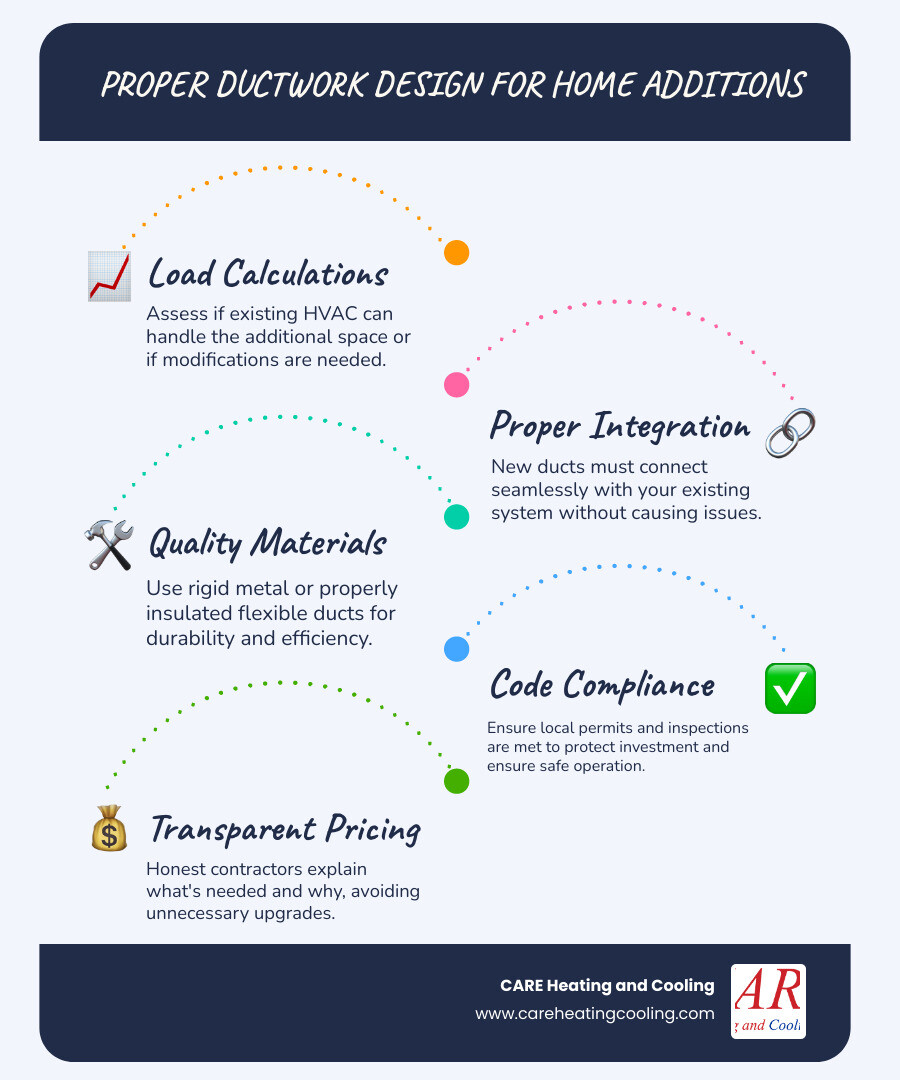
- Load calculations – A qualified contractor will assess if your current HVAC system can handle the additional space or if modifications are needed
- Proper integration – New ducts must connect seamlessly with your existing system without causing airflow problems or hot/cold spots
- Quality materials – Rigid metal or properly insulated flexible ducts ensure durability and efficiency
- Code compliance – Local permits and inspections protect your investment and ensure safe, effective operation
- Clear Communication – Honest contractors explain what’s needed and why, without pressure for unnecessary upgrades
For expert guidance on complete HVAC solutions for your home, visit our heating and cooling services page, or contact CARE Heating and Cooling for a straightforward assessment of your project.
The reality is that many homeowners focus entirely on the square footage and design of their addition while overlooking the ductwork—until they realize their beautiful new space is too hot in summer, too cold in winter, or their energy consumption has skyrocketed. Poorly performing ducts that leak conditioned air can reduce your system’s efficiency by as much as 20%. That’s not just uncomfortable—it’s a significant waste of energy.
A home addition changes your home’s heating and cooling needs. Your existing system was sized for your original floor plan, and simply tacking on a few extra vents rarely works well. Professional contractors use computerized load calculations to determine if your current furnace or air conditioner can handle the extra demand, or if zoning, ductwork modifications, or even a separate system makes more sense for your specific situation.
Why Professional Ductwork is Crucial for Your Home Addition
When we talk about home comfort, we often think about the furnace or air conditioner itself. But the unsung hero of your home’s HVAC system is actually the ductwork. Ducts are an integral part of your forced-air system – whether it’s a furnace, heat pump, or central air conditioner. Their primary job is to circulate heated or cooled air evenly to every room in your home, including your new addition. This circulation is vital for system efficiency, overall home comfort, and maintaining good indoor air quality.
Imagine building a beautiful new room in your Westerville home, only to find it’s always either too hot or too cold. This common frustration often stems from overlooked or improperly designed ductwork. Without proper planning and installation, your new space can become a “hot spot” or “cold spot,” significantly impacting the comfort of your entire home. Moreover, efficient ductwork contributes to the longevity of your HVAC system by ensuring it doesn’t have to work harder than necessary.
Ducts are like the veins in your body; they circulate air throughout your home, and their condition directly impacts comfort, efficiency, and the performance of your HVAC system. When your new addition is integrated seamlessly with properly designed ductwork, you’re not just adding space—you’re enhancing your entire home’s comfort and energy performance.
Understanding the Impact of Poorly Designed Ducts
The condition of your duct network is paramount, especially when considering a home addition. Putting in a new, highly efficient furnace, for example, is all well and good, but actually getting the air where you want it to go in an efficient manner depends almost entirely on your ducts.
Poorly designed or installed ductwork can lead to a host of problems:
- Leaky Ducts: These are notorious energy wasters. Leaks, holes, and loose connections allow conditioned air to escape into unconditioned spaces like attics, basements, or wall cavities. This means your HVAC system has to work harder and longer to maintain the desired temperature, leading to significantly higher energy consumption. Poorly performing ducts that leak conditioned air can reduce your system’s efficiency by as much as 20%.
- Reduced System Efficiency: When ducts are leaky or inadequately sized, your HVAC system struggles. This reduces its overall efficiency and can even lead to premature equipment failure, leading to more frequent repairs and premature replacements down the line.
- Uneven Temperatures: This is the classic “hot and cold spots” issue. If air isn’t distributed properly, some rooms will be comfortable while others are not. This is particularly problematic in a home addition, as the new space might receive insufficient airflow, making it perpetually uncomfortable.
- Poor Moisture Control: Inadequate airflow and leaky ducts can contribute to poor humidity control, especially in the summer. High humidity can lead to a stuffy, uncomfortable home and even promote mold growth.
- Air Quality Concerns: Leaky ducts can draw in dust, allergens, and other contaminants from unconditioned spaces, distributing them throughout your home. This can lead to poor indoor air quality and potential health and safety concerns for your family.
Studies have found that duct leakage occurs in the vast majority of installations, and incorrect airflow is also extremely common. These statistics highlight just how prevalent these issues are and why addressing your ductwork is crucial, especially with a new addition.
The Importance of Proper Airflow and System Sizing
Proper airflow in your home is critical for both comfort and energy savings. When considering a home addition in Westerville, our approach begins with meticulous planning. We use computerized calculations based on your home’s blueprints to determine the exact equipment sizing needed. This isn’t a guesswork game; it ensures your new HVAC system, or your existing one with modifications, is perfectly matched to your home’s heating and cooling demands.
Proper ductwork design is essential for delivering heating and cooling evenly throughout your home, preventing those frustrating hot and cold spots and ensuring maximum comfort and efficiency. This includes ensuring adequate return air, which is just as important as supply air. Without sufficient return air, your system can’t efficiently pull air back for conditioning, leading to pressure imbalances and reduced performance.
We emphasize designing ductwork to deliver heating and cooling as evenly as possible. This involves careful consideration of duct runs, sizes, and register placement. For improved comfort and efficiency, especially for managing humidity, variable speed blowers are an excellent consideration. These systems can precisely control airflow, improving humidity removal in the summer. Additionally, proper humidification in winter is important to protect wood floors, doors, woodwork, cabinets, and furniture from damage caused by overly dry air.
What to Consider When I’m looking for ductwork contractors in Westerville for a home addition project.
When you tell us, “I’m looking for ductwork contractors in Westerville for a home addition project,” we understand you’re starting on a significant home improvement. The ductwork for your new addition is not a standalone component; it’s an extension of your existing home’s circulatory system. This means careful planning is needed to integrate new and old systems, select the right ductwork materials, ensure proper sealing and insulation, and adhere to local building codes.
How to Integrate New Ductwork with Your Existing System
Integrating new ductwork into your existing HVAC system requires a comprehensive assessment. Our first step is to evaluate your current system’s capacity. Can your existing furnace or air conditioner handle the increased square footage of your addition? A professional load calculation is crucial here. This calculation will tell us if your current unit is sufficient, or if we need to consider other solutions.
Often, for home additions, zoning systems are an excellent solution. Zoning allows you to control the temperature in different areas or “zones” of your home independently. This means your new addition can have its own thermostat, ensuring it’s always comfortable without over-conditioning or under-conditioning other parts of your home.
We also focus on balancing airflow throughout the entire home. This ensures that conditioned air reaches your new addition effectively without starving other areas. A critical, often overlooked, aspect is ensuring adequate return air. Your plenum—the area directly above your furnace—is probably the most critical part of your duct network. Especially with older furnaces (over 25 years), the plenum might need to be re-worked or modified to accommodate the new duct runs and maintain efficient airflow. An inefficient plenum can reduce air velocity and contribute to poor aerodynamics, making your system work harder for less comfort.
Choosing the Right Ductwork Materials for Your Home Addition Project
The materials used for your ductwork play a significant role in its durability, efficiency, and overall performance. When planning for your Westerville home addition, we consider various options to best suit your needs:
- Rigid Ductwork: This type is typically made from galvanized steel, aluminum, or fiberglass duct board.
- Galvanized steel: Known for its durability and smooth interior, which provides excellent airflow and is resistant to kinks and punctures. It’s often used for main trunk lines and longer runs.
- Fiberglass duct board: Offers built-in insulation properties, which can be beneficial for energy efficiency.
Rigid ductwork is more durable and provides smoother airflow compared to flexible options, making it ideal for longer, straighter runs and main distribution lines.
- Flexible Ductwork: Made from a plastic and wire coil, flexible ductwork is lightweight and easy to install in tight spaces. It’s best suited for short runs and connecting rigid ducts to registers. While convenient, it’s crucial to ensure it’s properly supported and installed to prevent kinks or sagging, which can restrict airflow.
The choice between rigid and flexible, or a combination of both, depends on the layout of your addition, accessibility, and specific airflow requirements. Our goal is to ensure maximum durability and airflow efficiency for your new space, with appropriate insulation properties to prevent heat loss or gain as air travels through the ducts.
Common Ductwork Problems to Avoid
Even with the best intentions, ductwork can fall victim to common pitfalls that undermine your home addition’s comfort and efficiency. When I’m looking for ductwork contractors in Westerville for a home addition project, we focus on proactively avoiding these issues:
- Duct Leakage: This is perhaps the most prevalent problem. Leaks, holes, and loose connections in your ductwork allow conditioned air to escape into unconditioned areas (like attics or crawl spaces) and draw unconditioned air in. This means your HVAC system has to work harder to maintain the desired temperature, leading to significant energy waste and higher energy consumption. It also compromises indoor air quality by pulling in dust and allergens.
- Undersized Ducts: If the ductwork for your new addition is too small for the volume of air required, your HVAC system will struggle. Undersized ducts can cause the HVAC system to use more energy while delivering less comfort, and may lead to early equipment failure due to the strain on the blower motor. This results in inadequate airflow, leading to hot and cold spots and an inefficient system.
- Inefficient Plenum Design: The plenum, the main distribution box connected to your furnace or air handler, is critical. If it’s poorly designed or oversized, it can reduce air velocity, contribute to poor aerodynamics, and perpetuate “churning,” a wasteful phenomenon where air doesn’t move efficiently. This is especially important when integrating new ductwork for an addition.
- Inadequate Insulation: Ducts running through unconditioned spaces (like an attic or crawl space) should be properly insulated. Without insulation, conditioned air loses or gains heat as it travels, reducing the efficiency of your system and making it harder to maintain a consistent temperature in your new addition.
- Improperly Sized Grilles and Registers: These components are the final points of air delivery into your rooms. If they are undersized or improperly placed, they can restrict airflow, create noisy operation, and lead to uneven temperatures. Return grilles that are undersized, for example, can reduce the efficiency of your air conditioning system as well as the comfort in your home.
Addressing these issues during the design and installation phase of your home addition is far more effective than trying to fix them later.
Frequently Asked Questions About Home Addition Ductwork
How does new ductwork for an addition affect my existing HVAC system?
Adding new ductwork for an addition significantly impacts your existing HVAC system. Your current system was originally sized to efficiently heat and cool your home’s original footprint. When you add new square footage, you’re increasing the load on that system. A professional contractor will perform a detailed load calculation to determine the additional heating and cooling requirements of your new space.
Based on this calculation, we can assess if your current unit has enough capacity to handle the increased demand. In some cases, the existing system might be able to accommodate the addition with proper ductwork integration and balancing. However, if the existing unit is undersized, simply extending the ductwork could lead to it being overworked, resulting in reduced efficiency, higher energy consumption, frequent breakdowns, and an inability to adequately heat or cool either the old or new sections of your home.
To avoid these issues, we might recommend zoning your home, which allows for independent temperature control in different areas, or, in some cases, installing a separate, smaller HVAC system specifically for the addition. Our goal is to ensure that your entire home, including your new space, remains comfortable and energy-efficient without overworking your equipment.
How long should new ductwork last?
With proper installation and maintenance, new ductwork can be a long-lasting component of your home’s HVAC system. Generally, ductwork made from quality materials like galvanized steel or rigid fiberglass can last for 15 to 25 years or even longer.
The lifespan largely depends on the material used, the quality of the installation, and how well it’s maintained over time. Rigid metal ducts tend to be more durable and last longer than flexible ducts, which can be more prone to damage if not properly supported.
To maximize the lifespan and efficiency of your ductwork, we always recommend regular maintenance, including periodic cleaning, sealing any leaks that may develop, and ensuring insulation remains intact. Time, heat, and humidity can degrade duct insulation, so regular checks are beneficial. Properly installed and maintained ductwork ensures continued optimal performance, contributing to your home’s comfort and energy efficiency for decades.
What are the signs of poorly installed ductwork in my home addition project?
Even after your home addition project is complete, it’s wise to be vigilant for signs that the ductwork might not have been installed correctly. Spotting these issues early can prevent ongoing discomfort and wasted energy. Here are some common indicators:
- Uneven Temperatures or Hot/Cold Spots: This is one of the most immediate and frustrating signs. If your new room is consistently too hot in the summer or too cold in the winter, or if there’s a significant temperature difference compared to other parts of your home, it suggests poor airflow or inadequate sizing of the ductwork for the space.
- Whistling or Hissing Sounds: These noises often indicate air leaks in the ductwork or restrictions in airflow, such as undersized ducts or improperly adjusted registers. While some minor airflow sounds are normal, loud or persistent whistling is a red flag.
- A Noticeable Increase in Dust: If you find your new addition, or even your entire home, is dustier than usual, it could be a sign that leaky ductwork is pulling in dust and particles from unconditioned areas and distributing them into your living space.
- Higher-Than-Expected Energy Consumption: If your energy consumption significantly increases after the addition, and it’s not solely due to the larger space, inefficient or leaky ductwork could be a major culprit. Your HVAC system has to work harder to compensate for lost conditioned air.
- Reduced Airflow from Vents: Place your hand over the supply vents in your new addition. If the airflow feels weak or barely perceptible, it’s a strong indication that the ductwork is undersized, kinked, blocked, or poorly connected.
If you notice any of these signs in your Westerville home addition, it’s best to contact us for a professional assessment. We can diagnose the problem and recommend effective solutions to restore comfort and efficiency.
Finding a Trusted Westerville Contractor for Your Ductwork Needs
A home addition is a significant investment, and the ductwork is a critical component for ensuring long-term comfort and efficiency. By focusing on proper design, professional installation, and high-quality materials, you can ensure your new space is a comfortable and healthy part of your home for years to come. When I’m looking for ductwork contractors in Westerville for a home addition project, we understand you want expertise and reliability.
We pride ourselves on our ethical approach, with technicians paid to fix units, not to sell new ones. This means our recommendations are always in your best interest, focusing on the most effective and efficient solutions for your specific needs. Our commitment to customer-centric solutions and high satisfaction has even earned us the BBB Torch Award for Ethics. For ethical, expert service focused on your home’s specific needs, consider our award-winning team. We’re dedicated to helping homeowners in Westerville and surrounding areas like Dublin, Powell, and Lewis Center achieve optimal home comfort.