
Why Understanding How Whole Home Humidity Control Works With Your HVAC Matters for Your Comfort
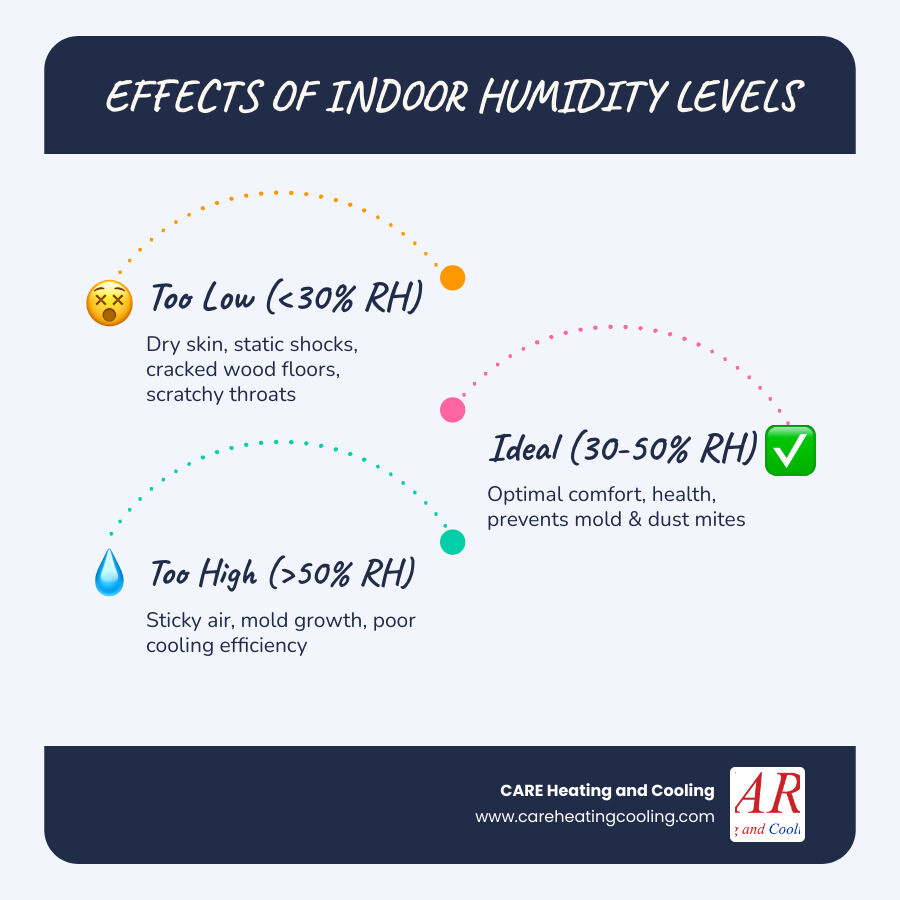
How whole home humidity control works with your HVAC comes down to this: your HVAC system circulates air throughout your home, and humidity control equipment — humidifiers and dehumidifiers — connects directly to that ductwork to automatically add or remove moisture as air passes through. A humidistat (similar to a thermostat, but for moisture) monitors your indoor humidity level and triggers the right equipment to keep your home in the ideal 30–50% relative humidity range year-round.
Here’s a quick overview of how it works:
- Air circulates through your HVAC system via return and supply ducts
- A humidistat reads the current indoor relative humidity (RH)
- If air is too dry, a whole-house humidifier adds moisture to the air stream before it’s distributed
- If air is too humid, a whole-house dehumidifier pulls moisture out of the air and drains it away
- Treated air is then delivered evenly to every room through your existing ductwork
- The system self-adjusts automatically — no portable units, no manual refilling
Think about what your home feels like in January versus July. In winter, cold outdoor air holds almost no moisture — and when your furnace heats that air, indoor humidity can drop below 20%. That leads to dry skin, static shocks, cracked wood floors, and scratchy throats. In summer, the opposite happens: humidity climbs, your home feels sticky and heavy, and mold risk goes up fast.
Your air conditioner does remove some moisture as a side effect of cooling — but it wasn’t designed as a dedicated dehumidifier. On mild but humid days, it may not run long enough to make a real dent in moisture levels. That’s where dedicated whole-home humidity control equipment, integrated directly with your HVAC, fills the gap.
An average household generates roughly 25 pounds of moisture every single day just from cooking, showering, and breathing. Without a system designed to manage that load, your HVAC is fighting a losing battle.
Understanding How Whole Home Humidity Control Works With Your HVAC
When we talk about Humidity Control/, we are looking at a centralized solution that treats your entire house as one ecosystem. Unlike portable units that you have to drag from room to room (and constantly refill or empty), a whole-home system is an “install it and forget it” upgrade.
At the heart of this setup is HVAC integration. The unit is typically installed on the supply or return plenum of your furnace or air handler. This is the “highway” where all the air in your home travels. By placing the humidity control here, we ensure that every cubic foot of air is treated before it reaches your living room, bedroom, or kitchen.
The “brain” of the operation is the humidistat. Much like your thermostat tells your furnace to kick on when it’s 65 degrees, the humidistat tells the humidifier to start when the air drops below your set point (usually 35-45%). In more advanced setups, smart controls can even look at the outdoor temperature. This is crucial in Columbus winters; if it’s 5 degrees outside, we actually want the indoor humidity a bit lower to prevent condensation from forming on your windows and causing wood rot.
The process follows a simple loop:
- Detection: The humidistat senses a deviation from the “sweet spot” (30-50% RH).
- Activation: The HVAC blower fan starts, and the humidity unit begins its work.
- Distribution: The moisture-balanced air travels through your existing ducts.
- Return: The air eventually flows back through the return vents to be checked again.
Adding Moisture: How Whole-House Humidifiers Integrate with Your Furnace
In the greater Columbus area, our winters are notoriously dry. When that happens, you need a way to inject moisture back into the air. There are three primary ways Whole Home Humidifiers Indoor Comfort/ is achieved through your HVAC system.
- Bypass Humidifiers: These are incredibly popular because they are simple and reliable. A Healthy Climate Whole Home Bypass Humidifiers/ works by redirecting some of the heated air from your supply duct, passing it through a water-soaked “evaporative pad,” and then “bypassing” it back into the return air to be distributed.
- Power (Fan-Powered) Humidifiers: A Healthy Climate Whole Home Power Humidifier/ has its own internal fan. This allows it to push moisture into the air even when the furnace isn’t running a full heating cycle. It’s a great choice for larger homes or homes with heat pumps that don’t get the air quite as hot as a gas furnace.
- Steam Humidifiers: These are the “heavy lifters.” They use electricity to boil water and create steam, which is then injected directly into the ductwork. These systems can add up to 34 gallons of moisture per day, making them ideal for massive floor plans or high-end homes with lots of delicate woodwork.
Comparison of Humidifier Types
| Feature | Bypass Humidifier | Power Humidifier | Steam Humidifier |
|---|---|---|---|
| Operation | Uses furnace blower | Built-in internal fan | Independent steam generation |
| Efficiency | High (uses existing heat) | High (works independently) | Highest moisture output |
| Best For | Small to medium homes | Large homes / Heat pumps | Very large homes / Custom wood |
| Maintenance | Annual pad change | Annual pad change | Annual canister cleaning |
How whole home humidity control works with your HVAC in winter
Humidity In Winter/ is more than just a comfort issue; it’s an energy-saving strategy. Have you ever noticed that 70 degrees feels chilly in the winter but sweltering in the summer? That’s because of humidity. Humid air holds heat more effectively than dry air.
By using Hvac/Columbus Oh/Whole Home Humidifiers/, you can actually turn your thermostat down by 2 or 3 degrees and feel just as warm. This can lead to a noticeable reduction in your monthly heating bills. Plus, it puts an end to those annoying static shocks every time you touch a doorknob or pet the dog.
Removing Excess Moisture: The Mechanics of Whole-Home Dehumidification
While winter is dry, Ohio summers are famously “muggy.” When the humidity climbs above 55-60%, your home becomes a breeding ground for mold, dust mites, and that “old basement” smell.
A Humiditrol Whole Home Dehumidification System/ works differently than a humidifier. It uses a refrigeration cycle. Warm, moist air is pulled from your home into the unit. It passes over cold evaporator coils, which causes the moisture to condense into water droplets (much like a cold soda can “sweats” on a hot day).
This water is collected and sent out through a condensate drainage line, usually the same one your AC uses. The air is then slightly reheated (so it doesn’t over-cool your home) and sent back through the ducts. This ensures Whole Home Dehumidifiers For Iaq/ provides consistent comfort across every floor, including the basement.
How whole home humidity control works with your HVAC during humid summers
During July and August in places like Westerville or Gahanna, your AC is working overtime. However, standard AC units often “short cycle”—they cool the air quickly and turn off before they’ve had a chance to remove the humidity. This leaves you with air that is cold but “sticky.”
By installing Hvac/Westerville Oh/Whole Home Dehumidifiers/, the system can run independently of the cooling cycle. If it’s 72 degrees but 70% humidity, the Healthy Climate Whole Home Dehimidifiers/ will kick on to dry the air without making your house feel like a walk-in freezer. This balanced approach can lower cooling costs by 5-7% because you won’t feel the need to “crank the AC” just to get rid of the stickiness.
The Benefits of Balanced Humidity for Your Health and Home
We often think of HVAC as just “temperature control,” but the “V” and “AC” stand for Ventilation and Air Conditioning—and moisture is a huge part of that. How Whole Home Humidifiers Improve Iaq/ (Indoor Air Quality) is one of the most significant upgrades you can make for your family’s health.
- Allergy and Asthma Relief: Dust mites and mold thrive in high humidity. By keeping levels below 50%, you stop these triggers from colonizing your home. Conversely, Is A Whole House Humidifier Worth It/ for those with respiratory issues? Absolutely. Moist air keeps your nasal passages from drying out, which is your body’s first line of defense against viruses and allergens.
- Skin and Sleep: No more waking up with a “cotton mouth” or itchy, flaky skin. Balanced humidity reduces snoring caused by dry throat tissues and helps your skin retain its natural moisture.
- Protecting Your Investment: If you have hardwood floors, a piano, or antique wood furniture, they are “living” materials. They expand and contract with moisture. Too dry, and they crack; too wet, and they warp or grow mold. Humidity control acts as an insurance policy for your home’s structure.
- Energy Efficiency: As mentioned, humid air feels warmer in winter, and dry air feels cooler in summer. Properly balanced humidity (40-50% RH) allows you to set your thermostat 2-3°F higher in summer and lower in winter without losing comfort.
Maintaining Your Humidity Control System for Peak Performance
At CARE Heating and Cooling, we are big believers in “fixing it right” rather than just selling you a new unit. To keep your system running ethically and efficiently, Keep Whole Home Humidifiers In Condition/ with these simple steps:
- Annual Water Panel Replacement: For humidifiers, the evaporative pad (or water panel) collects mineral deposits from your water. If it gets clogged, the air can’t pick up moisture. We recommend changing this at the start of every heating season.
- Filter Cleaning: Dehumidifiers have filters that catch dust before it hits the coils. These should be checked every 3 to 6 months to ensure Improving Iaq Whole Home Humidifiers/ continues to benefit your home.
- Drain Line Inspection: Since dehumidifiers pull gallons of water out of the air, the drain line must remain clear. A clogged drain can lead to water backing up into your furnace or onto your floor.
- Sensor Calibration: During your regular HVAC tune-up, our technicians check the humidistat to ensure it’s reading correctly. If the sensor is off, your system might be working harder than it needs to.
Frequently Asked Questions about HVAC Humidity Management
Can one HVAC system handle both humidification and dehumidification?
Yes! While they are usually two separate pieces of equipment (one for “adding” and one for “removing”), they both utilize the same ductwork and can be controlled by a single smart thermostat or HVAC controller. They operate independently; the humidifier won’t run when the dehumidifier is active. This provides a seamless, year-round balance for your home.
How do I know if I need a humidifier or a dehumidifier?
The best way to know is to Do I Need A Humidifier Or Dehumidifier/ by looking at the signs.
- Need a Humidifier? Look for static electricity, dry skin, “bloody” noses in winter, and gaps appearing in your hardwood floors.
- Need a Dehumidifier? Look for condensation on windows, musty smells in the basement, “sticky” skin, and doors that stick in their frames during summer. Using a simple hygrometer (available at most hardware stores) can give you a definitive reading. If you’re consistently outside the 30-50% range, it’s time to give us a call.
What is the difference between whole-home and portable units?
When comparing a Whole Home Humidifier Vs Portable Humidifier/, the whole-home version wins on almost every front.
- Maintenance: Portables require daily refilling or emptying. Whole-home systems are plumbed into your water and drain lines.
- Coverage: A portable unit treats one room. A whole-home system treats every inch of your house.
- Noise: Portables have loud fans in your living space. Whole-home units live in the basement or utility closet.
- Safety: Portables often have standing water, which can grow mold or bacteria if not cleaned every few days. Whole-home systems use fresh, running water or steam.
Conclusion
Understanding how whole home humidity control works with your HVAC is the first step toward a more comfortable, healthy, and energy-efficient home. Whether you are dealing with the bone-dry air of a Dublin winter or the swampy humidity of a Hilliard summer, a centralized solution is the most effective way to protect your family and your property.
At CARE Heating and Cooling, we’ve built our reputation on being the most ethical HVAC service in the Columbus area. As a BBB Torch Award winner, we take pride in our “paid to fix, not sell” philosophy. We won’t try to talk you into equipment you don’t need; we’ll simply provide the honest, expert service required to keep your air clean and your home comfortable.
If you’re ready to see the difference that balanced humidity can make, explore our options for Whole-Home Humidifiers – Indoor Comfort or give us a call today. We’re here to help you breathe easier, no matter what the Ohio weather throws your way.